Credit: This reflection was inspired by Fr. Samuel Keyes, “Pray for the Dead Today,” published by Catholic Answers.
Each November the Church turns our eyes toward the grave. Having rejoiced on All Saints’ Day with those who already behold the face of God, she bids us on All Souls’ Day, and through the whole month, to remember the faithful departed who still await that vision. This is no mere sentiment or vague honoring of the past. It is a duty of charity, as old as the Church herself.
Saints and Souls Are Not the Same
It has become common to blur the two feasts together, as if every departed loved one were simply “in a better place.” The Church has never spoken so carelessly. There are those in glory who intercede for us, and there are many others for whom we are bound to intercede. As Fr. Keyes puts it plainly, we pray “because we don’t let our ignorance of the afterlife stop us from loving those we love.” To presume that our dead need nothing from us is, in truth, to abandon them.
What the Church Teaches
The Catechism teaches that those who die in God’s grace and friendship, but still imperfectly purified, are indeed assured of eternal salvation; yet after death they undergo purification, so as to achieve the holiness necessary to enter the joy of heaven (CCC 1030). The Church calls this final purification Purgatory (CCC 1031). It is not a second chance, nor a lesser hell, but the fire of God’s own love burning away all that is not yet fit for Him.
Scripture bears witness to this practice. Judas Maccabeus “made atonement for the dead, that they might be delivered from their sin” (2 Maccabees 12:46). Our Lord speaks of sins that will not be forgiven “in this age or in the age to come” (Matthew 12:32), and St. Paul writes of a man saved, “but only as through fire” (1 Corinthians 3:15). From the catacombs onward, Christians inscribed prayers for the departed on their tombs and offered the Holy Sacrifice for them.
Death Is No Small Thing
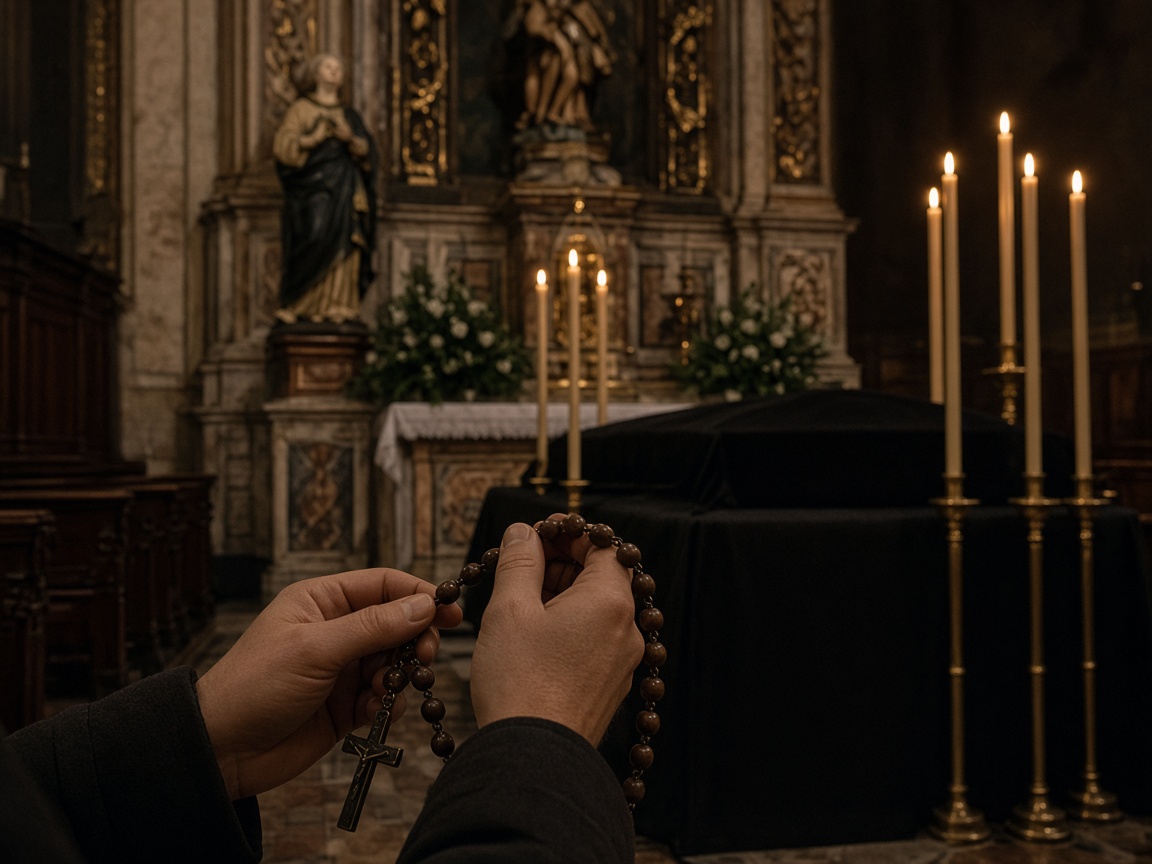
Our age prefers not to look at death. We dress funerals in the language of celebration and hasten past the coffin. But the Catholic faith takes the body seriously. Man is body and soul together, and their separation at death is a real wound, a consequence of sin that will be healed only at the resurrection of the flesh. The ancient prayers of the Requiem, the black vestments, the Dies Irae, were never morbid. They were honest. They taught the faithful to fear the judgment of God, and therefore to pray.
Why We Pray for Them
- Charity does not end at the grave. The Communion of Saints binds the Church Militant on earth, the Church Suffering in Purgatory, and the Church Triumphant in heaven into one Body.
- The holy souls cannot help themselves. Their time of merit has ended; they depend on our suffrages.
- We do not know who is saved. Apart from the canonized saints, we cannot presume. Prayer is the humble, loving response to that uncertainty.
- It prepares us for our own death. Remembering the dead teaches us to live in the light of the Four Last Things.
Practical Ways to Pray This November
- Have Masses offered. The Holy Sacrifice of the Mass is the greatest suffrage we can give the departed. Request a Mass at your parish for a deceased relative or friend.
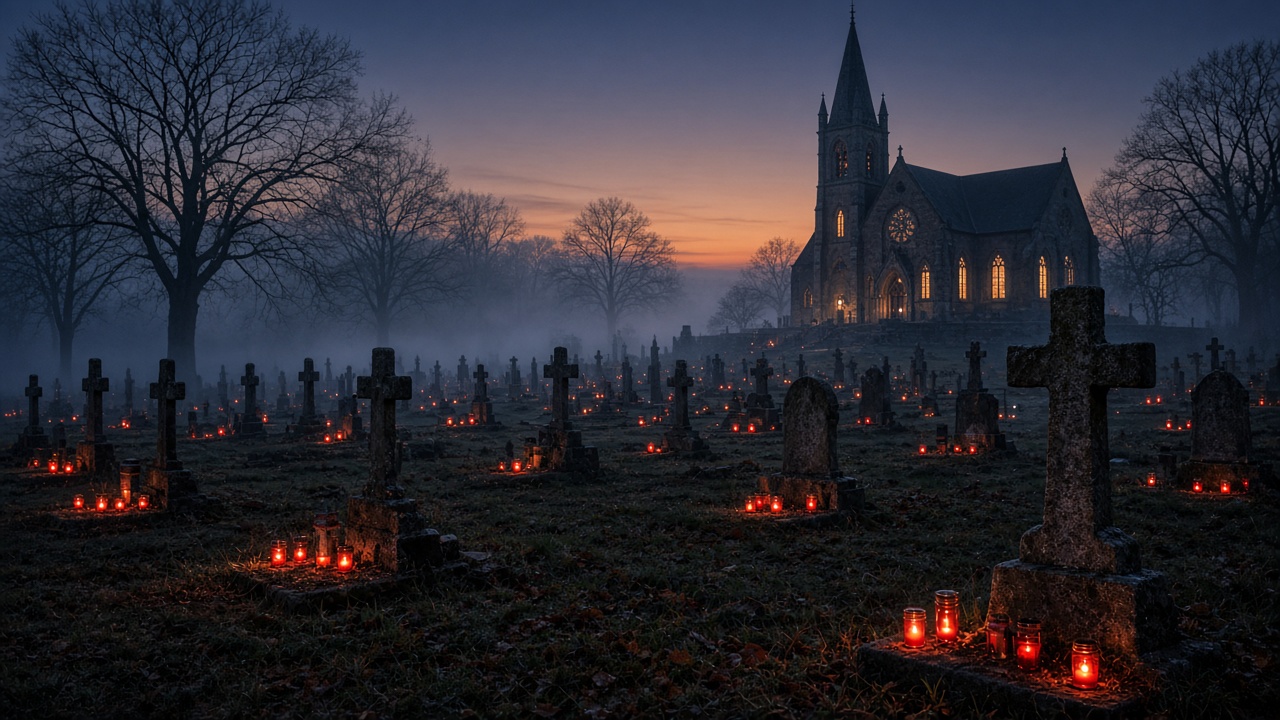
- Visit a cemetery. From November 1 to 8, the faithful may gain a plenary indulgence, applicable only to the souls in Purgatory, by devoutly visiting a cemetery and praying for the dead, under the usual conditions (sacramental Confession, Holy Communion, prayer for the Holy Father’s intentions, and detachment from all sin).
- Pray the Eternal Rest. “Eternal rest grant unto them, O Lord, and let perpetual light shine upon them. May they rest in peace. Amen.” Make it a habit at every meal, every bell, every passing of a graveyard.
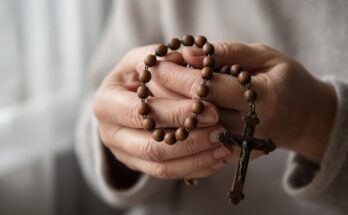
- Offer the Rosary and the De Profundis. Psalm 130, “Out of the depths I have cried to thee, O Lord,” is the Church’s ancient prayer for the dead.
- Offer up sacrifices. Fasting, almsgiving, and small daily sufferings united to Christ may be offered for the holy souls.
- Keep a list. Write down the names of your dead, family, friends, benefactors, and the forgotten souls who have no one to pray for them, and keep it by your prayer corner all month.
The holy souls are not forgotten by God, and they must not be forgotten by us. If we pray for them now, we may trust that they, once in glory, will remember us. May the souls of all the faithful departed, through the mercy of God, rest in peace. Amen.
Originally inspired by “Pray for the Dead Today” by Fr. Samuel Keyes at Catholic Answers.