Quick answer: Our Lady of Walsingham is a title of the Blessed Virgin Mary honored at Walsingham, a village in Norfolk, England. According to the medieval Pynson Ballad, in 1061 a noblewoman named Richeldis de Faverches was shown in spirit the house in Nazareth where the Angel Gabriel announced the birth of Jesus, and was asked to build a replica in Walsingham. That “Holy House” became one of the great pilgrimage shrines of medieval Europe. It was destroyed in 1538, revived in the late 1800s, and today the Catholic National Shrine is a Minor Basilica. Her feast is celebrated on September 24.
The vision of Richeldis: a “memorial of the Annunciation”
The story comes to us through an old poem called the Pynson Ballad. Richeldis, a devout widow and the lady of the manor at Walsingham, prayed that she might do some special work in honor of Our Lady. In answer, the Blessed Virgin led her in spirit to Nazareth, showed her the house of the Annunciation, and asked her to build a copy in England. In the words the Catholic Bishops’ Conference of England and Wales quotes from the ballad, it was to be a place “where shall be had a memorial of my Salutation” (CBCEW).
That is the heart of Walsingham. It is a shrine to the moment told in Luke 1:26–38, when Mary said, “Behold the handmaid of the Lord; be it done to me according to thy word,” and the Word became flesh. The Catechism of the Catholic Church teaches that “the Annunciation to Mary inaugurates ‘the fullness of time'” (CCC 484). Every pilgrimage to Walsingham, then and now, points beyond Mary to her Son.
“England’s Nazareth”: a medieval pilgrimage shrine
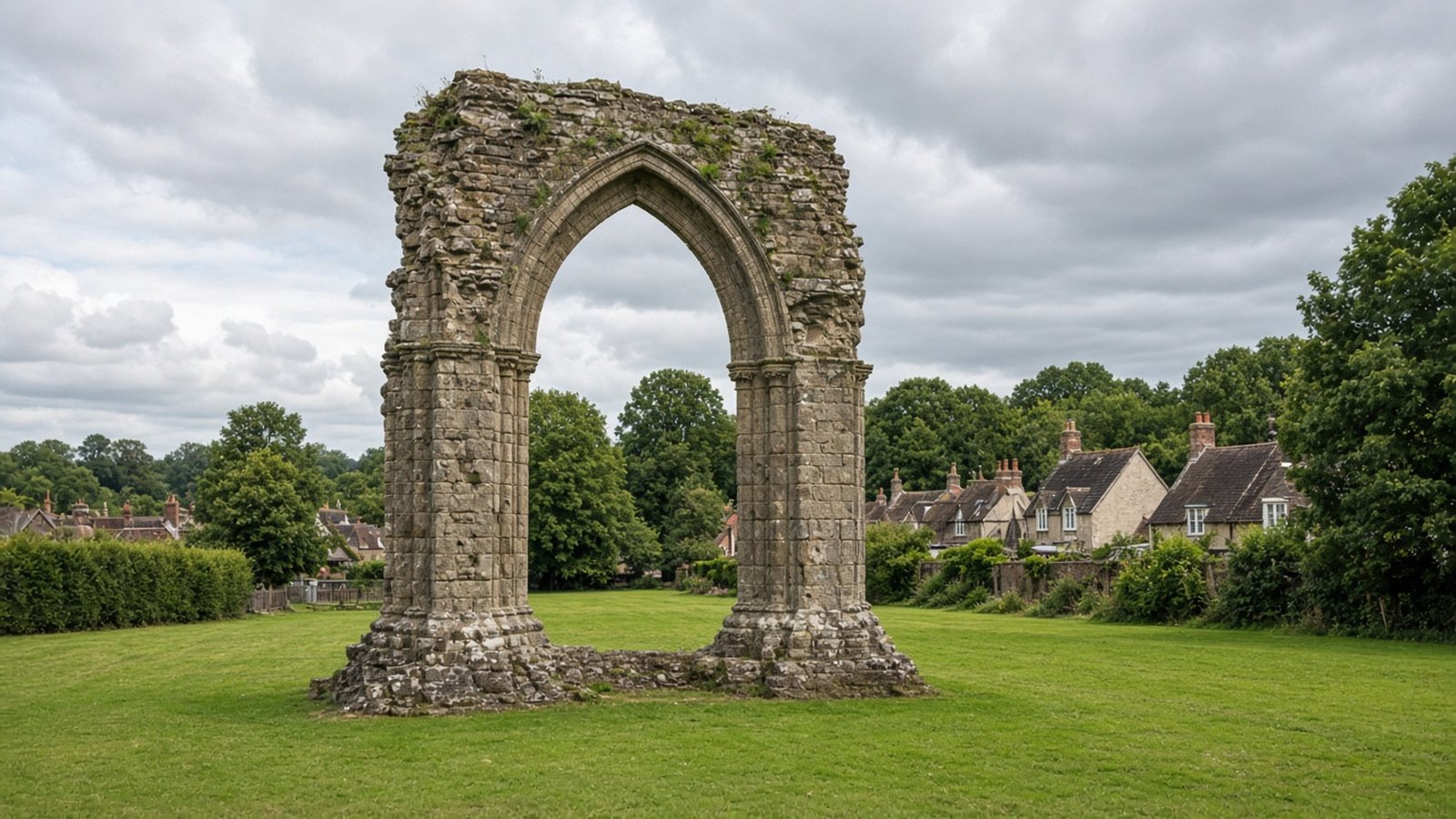
The Holy House became known as “England’s Nazareth.” Augustinian Canons took charge of the shrine in the 1100s and built a priory beside it, and a Franciscan friary followed in 1347 with papal permission (CBCEW). According to the Catholic National Shrine, every king of England from Henry III to Henry VIII came to Walsingham on pilgrimage (Walsingham Shrine).
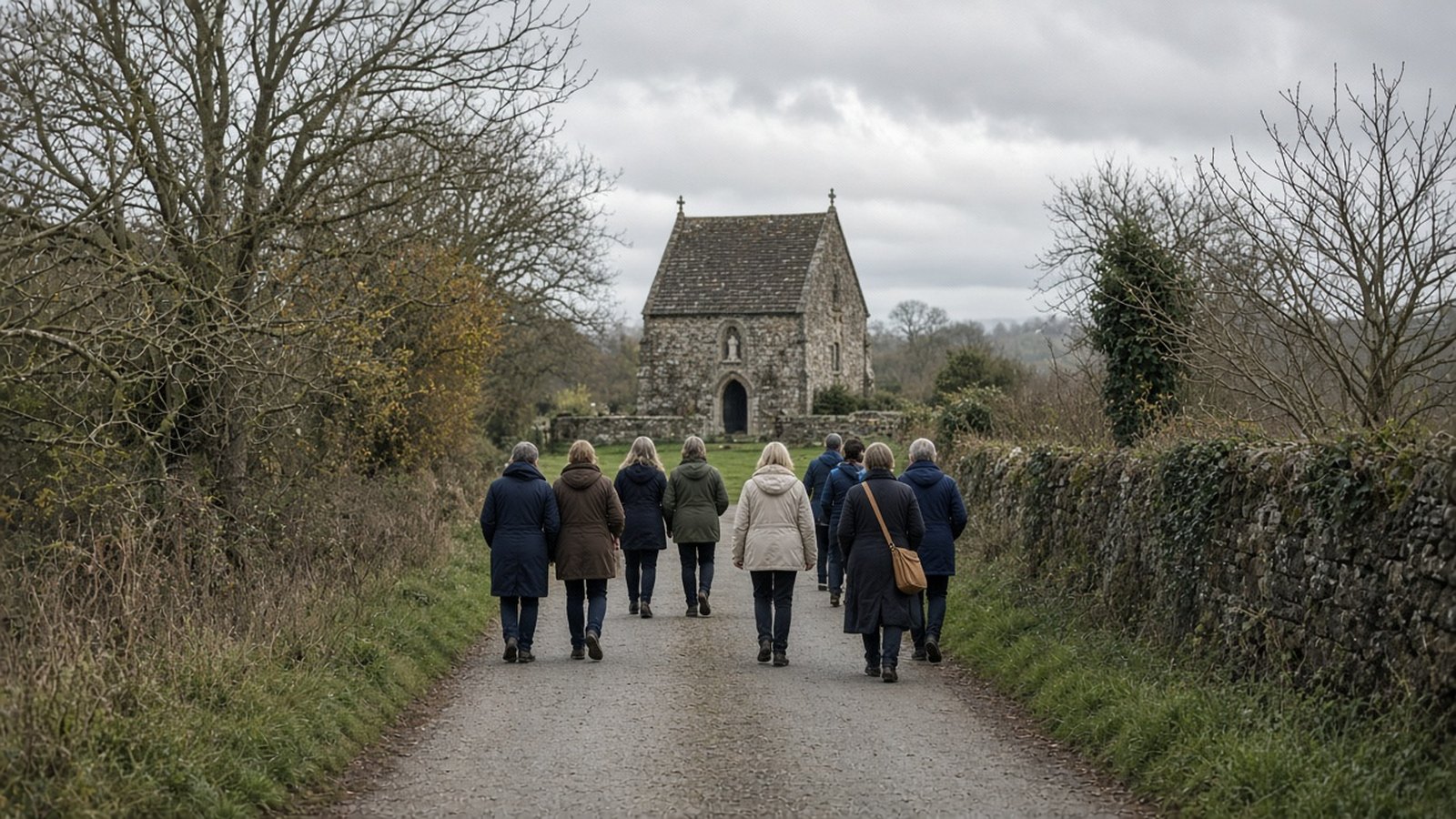
Pilgrims made their way along routes dotted with wayside chapels. The last of these, about a mile from the village, was the 14th-century chapel of St. Catherine at Houghton St. Giles, known today as the Slipper Chapel. Its name is popularly linked to the custom of pilgrims leaving their shoes there to walk the final “Holy Mile” barefoot.
Destruction in 1538
At the English Reformation, the shrine was swept away. In 1538 the priory was handed over to King Henry VIII’s commissioners, the famous statue of Our Lady of Walsingham was taken to London to be burned, and the Holy House was completely destroyed (Walsingham Shrine). For centuries, pilgrimage stopped. Remarkably, the little Slipper Chapel survived, though it fell into secular use and disrepair.
The revival
The story did not end there.
- 1890s: Charlotte Pearson Boyd, a recent convert to the Catholic Faith, bought the Slipper Chapel and had it restored.
- 1897: With the blessing of Pope Leo XIII, the Shrine of Our Lady of Walsingham was refounded in the Catholic church at King’s Lynn. On August 20 of that year, the first public pilgrimage to Walsingham since the Reformation took place.
- 1934: Cardinal Francis Bourne, on pilgrimage with the bishops of England and Wales and thousands of faithful, declared the Slipper Chapel the National Shrine of Our Lady for Roman Catholics in England.
- 2015: Pope Francis made the Catholic Shrine a Minor Basilica.
- 2024: The Vatican approved raising Our Lady of Walsingham from an obligatory memorial to a Feast in the national calendar for England, celebrated on September 24.
(Sources: Catholic National Shrine of Our Lady; CBCEW, “England’s Nazareth”; CBCEW, “Our Lady of Walsingham raised to the rank of Feast”.)
Walsingham today also has an Anglican shrine, established in the village in the 1930s, so visitors will find both Catholic and Anglican places of pilgrimage there.
Our Lady of Walsingham in America
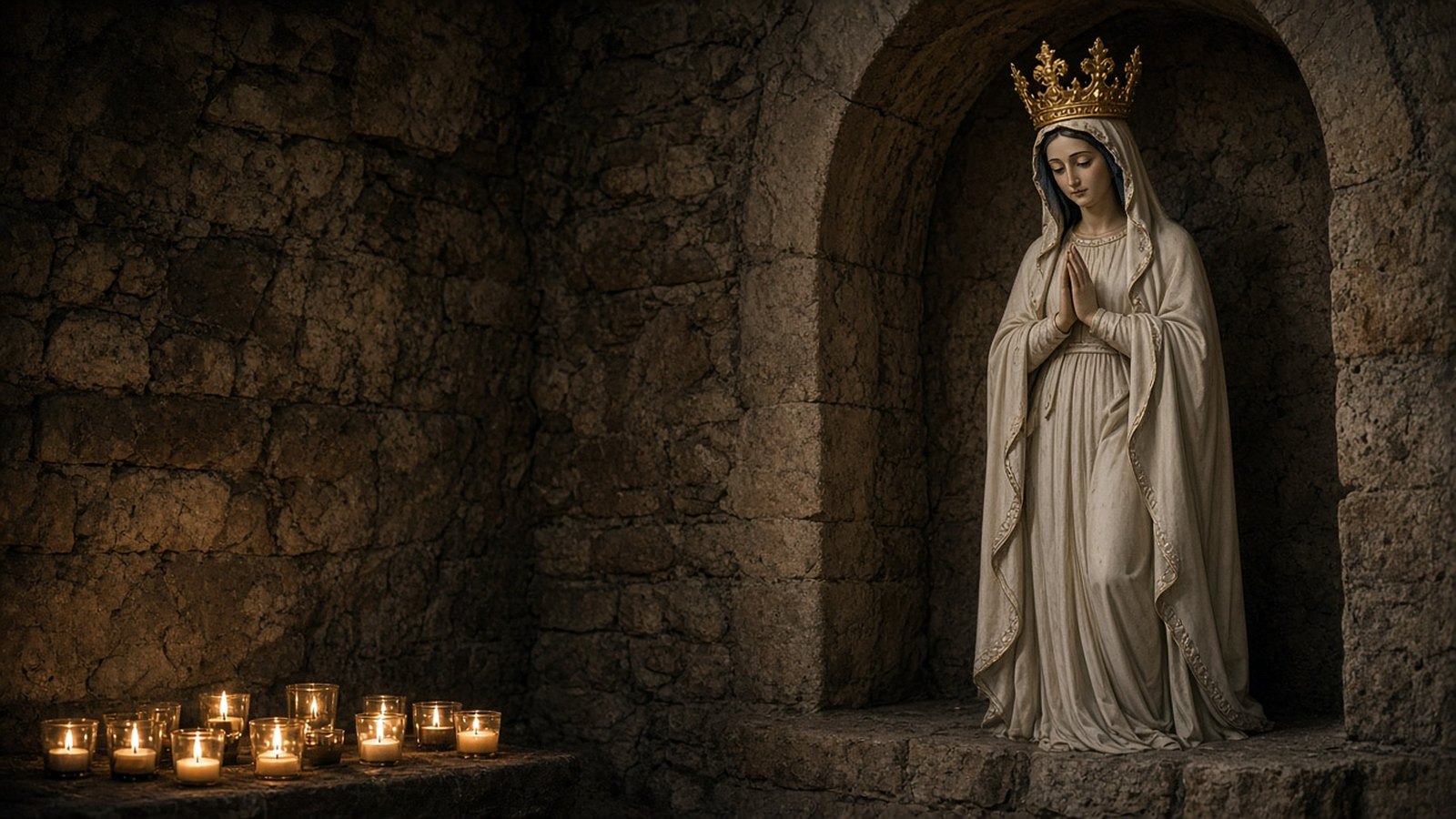
You don’t have to cross the Atlantic to meet Our Lady of Walsingham. She is the patroness of the Personal Ordinariate of the Chair of Saint Peter, established by the Holy See on January 1, 2012, for former Anglicans entering full communion with the Catholic Church in the United States and Canada. Its cathedral is the Cathedral of Our Lady of Walsingham in Houston, Texas, which describes itself as the first Catholic parish in the United States dedicated to Our Lady under this title (Ordinariate; Cathedral of Our Lady of Walsingham).
How to honor Our Lady of Walsingham
You can grow in this devotion right where you are:
- Meditate on the Annunciation. Read Luke 1:26–38 slowly and ask for Mary’s openness to God’s will.
- Pray the Angelus. This traditional prayer, often prayed at 6 a.m., noon, and 6 p.m., is itself a memorial of the Annunciation, which is exactly what Richeldis was asked to build.
- Pray the Joyful Mysteries of the Rosary. The first Joyful Mystery is the Annunciation.
- Keep her feast on September 24. Attend Mass if you can, and pray for the conversion of England and for Christian unity.
- Make a pilgrimage, near or far. If Norfolk isn’t possible, visit a local Marian shrine or your parish church and offer the journey for a special intention.
- Learn your faith. Walsingham’s revival was powered by converts and returning Catholics who hungered for the truth. Our Shows page lists Catholic apologetics programs that can help you do the same.
Frequently asked questions
When is the feast of Our Lady of Walsingham? September 24. In England it has been celebrated as a Feast since 2024, and it is also the patronal feast of the Personal Ordinariate of the Chair of Saint Peter.
Is Walsingham an approved Marian apparition? The account of Richeldis comes from the medieval Pynson Ballad and centuries of tradition. The Church has honored the shrine for nearly a thousand years, named it England’s National Shrine of Our Lady, and made it a Minor Basilica. As with all private revelations, Catholics are not required to believe in it, but they are free to embrace the devotion.
Why is it called “England’s Nazareth”? Because the Holy House was built as a replica of the house in Nazareth where the Annunciation took place.
What is the Slipper Chapel? A 14th-century wayside chapel about a mile from Walsingham. It survived the Reformation and has been the Catholic National Shrine since 1934.
Do Catholics worship Mary at Walsingham? No. Catholics worship God alone. We honor Mary as the Mother of God, and Walsingham’s whole purpose is to remember the Incarnation of her Son.
Listen, learn, and support the mission
Walsingham was rebuilt by people who weren’t afraid to ask hard questions and seek the truth. That’s the spirit of Walsingham Radio, too. Our founder, Cesar Ramirez, shares on our Who Are We? page how Catholic radio and apologetics brought him back to the Faith.
- Listen 24/7: Walsingham Radio Streams
- Browse the lineup: Shows
- Questions or prayer requests: Contact us or email [email protected]
- Support the mission: Give
Our Lady of Walsingham, pray for us.