Cinco de Mayo is one of the most recognized Mexican celebrations in the United States, but it is also one of the most misunderstood. Many people think it is Mexican Independence Day, but that is actually celebrated on September 16. Cinco de Mayo remembers the Battle of Puebla, when Mexican forces defeated the French army on May 5, 1862.
So, what role does Cinco de Mayo play in the Catholic Church?
The honest answer is this: Cinco de Mayo is not an official Catholic holy day, feast day, or liturgical celebration. The Catholic Church does not observe Cinco de Mayo in the same way it observes Christmas, Easter, the Feast of Our Lady of Guadalupe, or the feast days of saints. However, Cinco de Mayo can still hold meaningful importance for Catholic communities, especially Mexican and Mexican American Catholics, because it connects history, culture, identity, gratitude, sacrifice, and faith.
At its heart, Cinco de Mayo is not simply about food, music, or celebration. It is about remembering a moment when Mexico, a young and struggling nation, defended itself against a powerful foreign army. The victory at Puebla became a symbol of courage, resistance, and national dignity. Britannica describes the Battle of Puebla as a symbol of Mexico’s determination to resist foreign aggression.
For Catholics, that kind of remembrance can be deeply spiritual. Catholic tradition has always valued memory: remembering the sacrifices of those who came before us, giving thanks to God for protection, honoring the dignity of a people, and preserving the stories that shape family and community.
Cinco de Mayo Is Not a Catholic Feast Day
It is important to say clearly that Cinco de Mayo is not a religious feast on the Catholic calendar. It is a civic and historical commemoration. Catholics are not required to attend Mass for Cinco de Mayo, and the day does not have its own universal prayers, readings, or liturgical celebration.
But that does not mean the day has no Catholic connection.
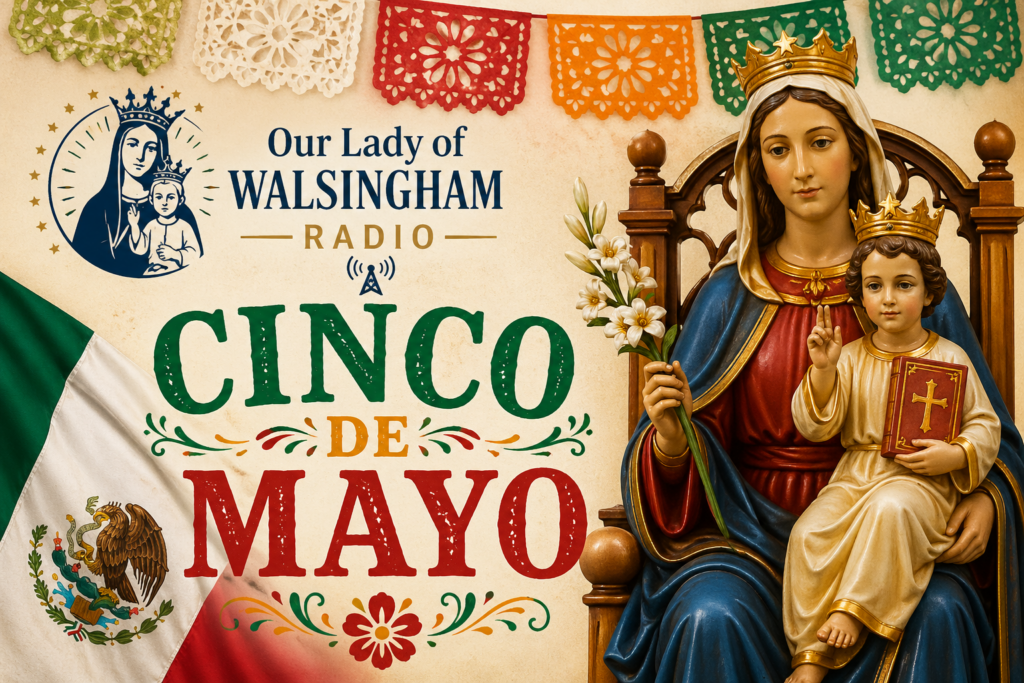
Mexico has a deep Catholic heritage. Many Mexican families, communities, and traditions have been shaped by Catholic faith for generations. Because of that, cultural celebrations often include religious elements such as prayer, Mass, processions, parish festivals, blessings, and devotion to Our Lady of Guadalupe. Our Lady of Guadalupe, whose feast day is December 12, holds a special place in Mexican Catholic identity and is widely honored as a spiritual mother and symbol of unity.
In that sense, Cinco de Mayo can become an opportunity for Catholics to celebrate Mexican heritage in a way that is faithful, respectful, and rooted in gratitude.
The Catholic Historical Context of Cinco de Mayo
The history surrounding Cinco de Mayo is complex. The Battle of Puebla happened during a difficult time in Mexican history, shortly after years of conflict over the relationship between Church and state. Mexico had gone through La Reforma, a period of liberal reforms that reduced the power and property of the Catholic Church, and the Reform War, a civil conflict involving liberals and conservatives. Britannica notes that the 1857 Constitution and the Reform Laws created major conflict with religious and military communities in Mexico.
Because of this, the Catholic angle to Cinco de Mayo should be handled carefully. The battle was not simply “Catholics versus non-Catholics.” Most Mexicans at the time were Catholic, and France was also a Catholic country. The conflict was political, national, military, and cultural, not a simple religious war.
Still, for many ordinary Mexican Catholics, the defense of their homeland would have been understood through the lens of faith, family, and providence. The people fighting and praying during that period were not detached from their Catholic identity. Their faith shaped how they understood suffering, sacrifice, courage, and hope.
Why Cinco de Mayo Matters to Catholic Communities Today
Today, Cinco de Mayo plays a role in the Catholic Church mostly through community life, especially in parishes with Mexican or Mexican American members. A parish may not celebrate Cinco de Mayo as a liturgical feast, but it may recognize the day through cultural events, food, music, fellowship, and prayer.
These celebrations can be beautiful when they are done with respect. They give Catholic communities a chance to honor Mexican history without reducing it to stereotypes. They can also help younger generations learn where they come from and why their heritage matters.
For Catholic families, Cinco de Mayo can be a reminder of several Christian values:
Gratitude: giving thanks to God for the perseverance of a people.
Courage: remembering those who stood firm against overwhelming odds.
Unity: bringing families, parishes, and communities together.
Dignity: honoring Mexican culture as something meaningful and worthy of respect.
Faith: recognizing that history is not only about politics and battles, but also about the people who prayed, sacrificed, and trusted God in difficult times.
A Better Catholic Way to Celebrate Cinco de Mayo
A Catholic celebration of Cinco de Mayo does not have to be complicated. It can begin with prayer. Families can pray for Mexico, for Mexican American communities, for immigrants, for peace, and for unity. Parishes can use the day as a chance to celebrate culture while also teaching the true meaning of the holiday.
A meaningful Catholic Cinco de Mayo celebration might include attending Mass, praying a rosary, honoring Our Lady of Guadalupe, sharing a meal with family, learning about the Battle of Puebla, supporting Mexican-owned businesses, or hosting a parish event that celebrates Mexican music, food, and history in a respectful way.
The key is to remember that Cinco de Mayo is not just a party. It is a remembrance. It is a story of courage. It is a cultural moment that can point Catholics toward gratitude, humility, and love for one’s neighbor.
Conclusion
Cinco de Mayo does not have an official role in the Catholic Church’s liturgical calendar, but it can still have a meaningful place in Catholic life. For Mexican and Mexican American Catholics, it is an opportunity to remember history, honor heritage, and give thanks to God for the strength of a people who endured hardship with courage.
When celebrated with faith and respect, Cinco de Mayo becomes more than a cultural holiday. It becomes a reminder that God is present in the history of nations, in the sacrifices of families, and in the traditions that keep communities united.
Cinco de Mayo is not Mexican Independence Day. It is not a Catholic feast day. But for many Catholics, it can still be a day of remembrance, gratitude, faith, and cultural pride.