On November 4 the Church keeps the feast of St. Charles Borromeo, Cardinal Archbishop of Milan, one of the great shepherds of the Catholic Reformation. In the traditional Roman calendar it is a feast of the third class, with a commemoration of the early martyrs Sts. Vitalis and Agricola; in the Ordinary Form it is an obligatory memorial. Either way, it is a day to thank God for a bishop who spent himself completely for the souls entrusted to him.
A Prince Who Chose Humility
Charles was born in 1538 at the family castle of Arona on Lake Maggiore, into one of the noblest houses of Lombardy. His uncle became Pope Pius IV, and in 1560, at only twenty-two, Charles was made a cardinal and given the administration of the Archdiocese of Milan. Wealth, rank, and the comforts of the Roman court were all his for the taking.
The sudden death of his elder brother shook him deeply. Rather than step into the family’s worldly inheritance, Charles was ordained a priest, consecrated a bishop, and took up a life of prayer, fasting, and penance. The single word on the Borromeo coat of arms became the program of his life: Humilitas, humility.
The Council of Trent and the Roman Catechism
Charles worked tirelessly to bring the Council of Trent to its final sessions and close in 1563, and then to put its decrees into practice. He oversaw the preparation of the Roman Catechism, the Catechism of the Council of Trent, published in 1566 as a sure guide for parish priests. The modern Catechism of the Catholic Church itself names him among the “holy bishops and theologians” whose labors after Trent gave the Church its great catechisms (CCC 9).
In Milan he held synods, founded seminaries so that priests would be properly formed, established schools of Christian doctrine for children, reformed religious houses, and insisted on the reverent celebration of the Holy Sacrifice. Much of what Catholics came to know as the ordinary, dignified life of a parish, the well-kept altar, the catechism class, the trained priest, owes something to his example.
The Good Shepherd in Time of Plague
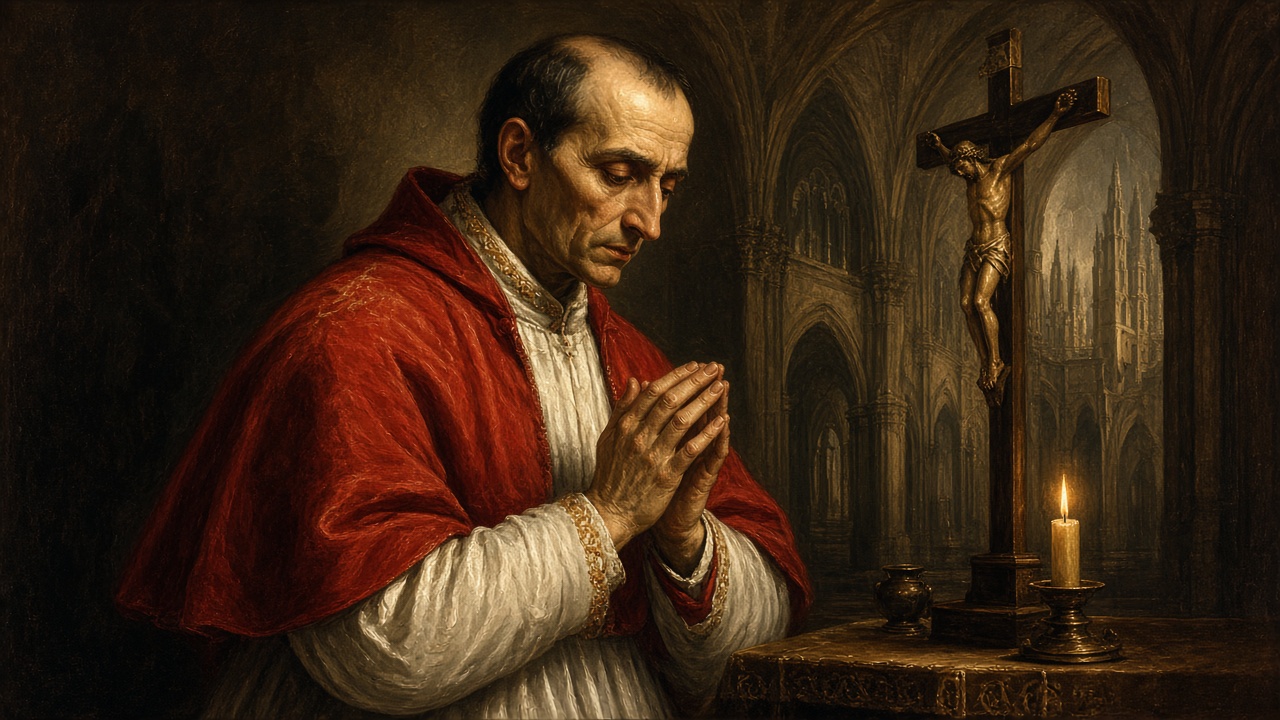
His reforms made enemies. In 1569 a member of a corrupt religious order he had tried to reform fired a shot at him while he knelt at evening prayer in his chapel; he rose unharmed and continued the prayer. But his finest hour came in 1576, when plague struck Milan and many of the city’s leaders fled.
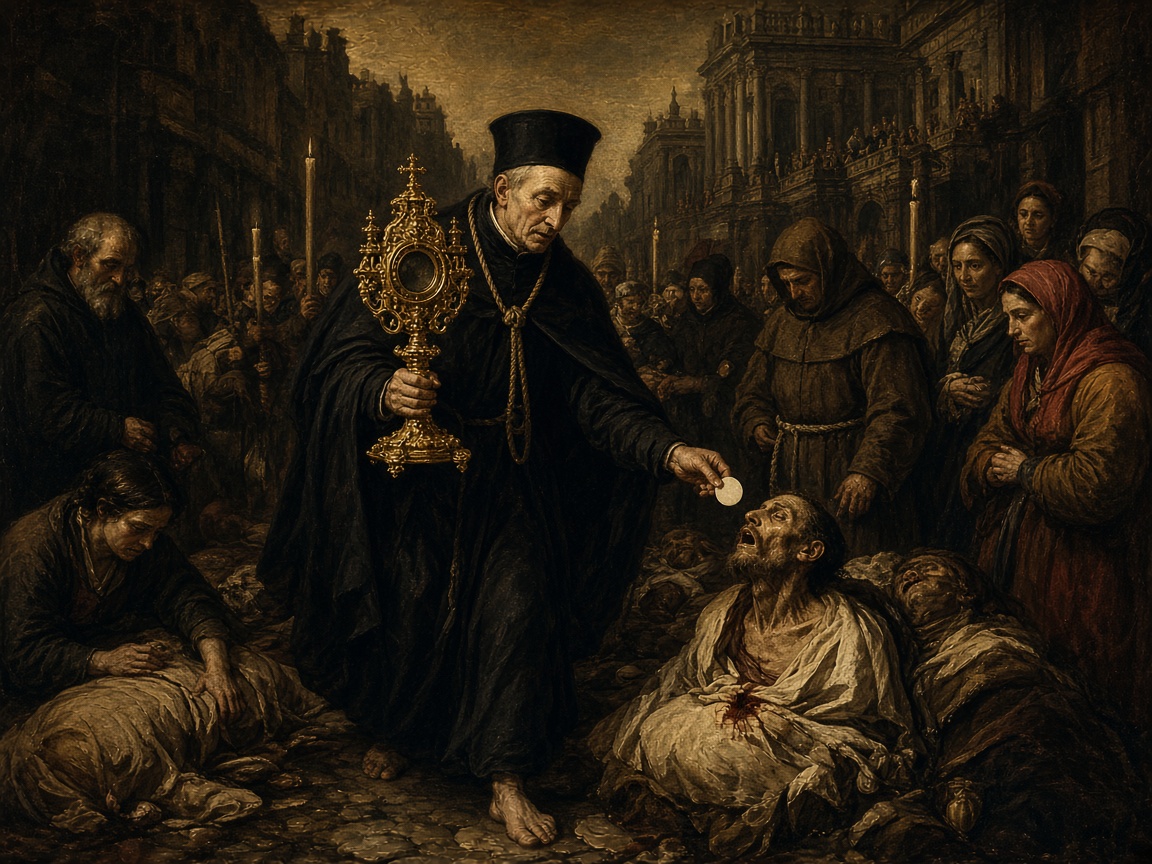
Charles stayed. He visited the sick and dying, brought them the Sacraments, spent his own fortune and sold his furnishings to feed the poor, and led penitential processions through the streets barefoot, a rope about his neck, carrying the relic of the Holy Nail. He lived the words of Our Lord: “I am the good shepherd. The good shepherd giveth his life for his sheep” (John 10:11).
A Short Life, Wholly Spent
Worn out by labor and penance, Charles died in Milan on November 3, 1584, at just forty-six years old. Pope Paul V canonized him in 1610. He is a patron of bishops, seminarians, and catechists, and his body rests in the crypt of Milan Cathedral.
The Collect of the Feast
The traditional Missal gives us this prayer for his feast:
Keep, O Lord, Thy Church under the continual protection of blessed Charles, Thy Confessor and Bishop; that as his pastoral solicitude made him glorious, so his intercession may make us ever fervent in Thy love. Through our Lord.
How to Keep the Feast
- Assist at Holy Mass on November 4 if you can, and pray for your bishop and for all bishops, that they may be faithful shepherds (1 Peter 5:2-3).
- Pray for priests and seminarians. St. Charles founded seminaries because he knew the Church is renewed through holy priests.
- Learn your faith. Read a chapter of the Roman Catechism or the Catechism of the Catholic Church, or teach a child the basics of the faith.
- Practice a small penance or act of charity in his honor, remembering his care for the sick and the poor.
- Pray for the holy souls. His feast falls in November, the month of the faithful departed, so offer a prayer for the dead as well.
St. Charles Borromeo, faithful shepherd and lover of the Cross, pray for us, and obtain for the Church bishops and priests after the Heart of Christ. Amen.