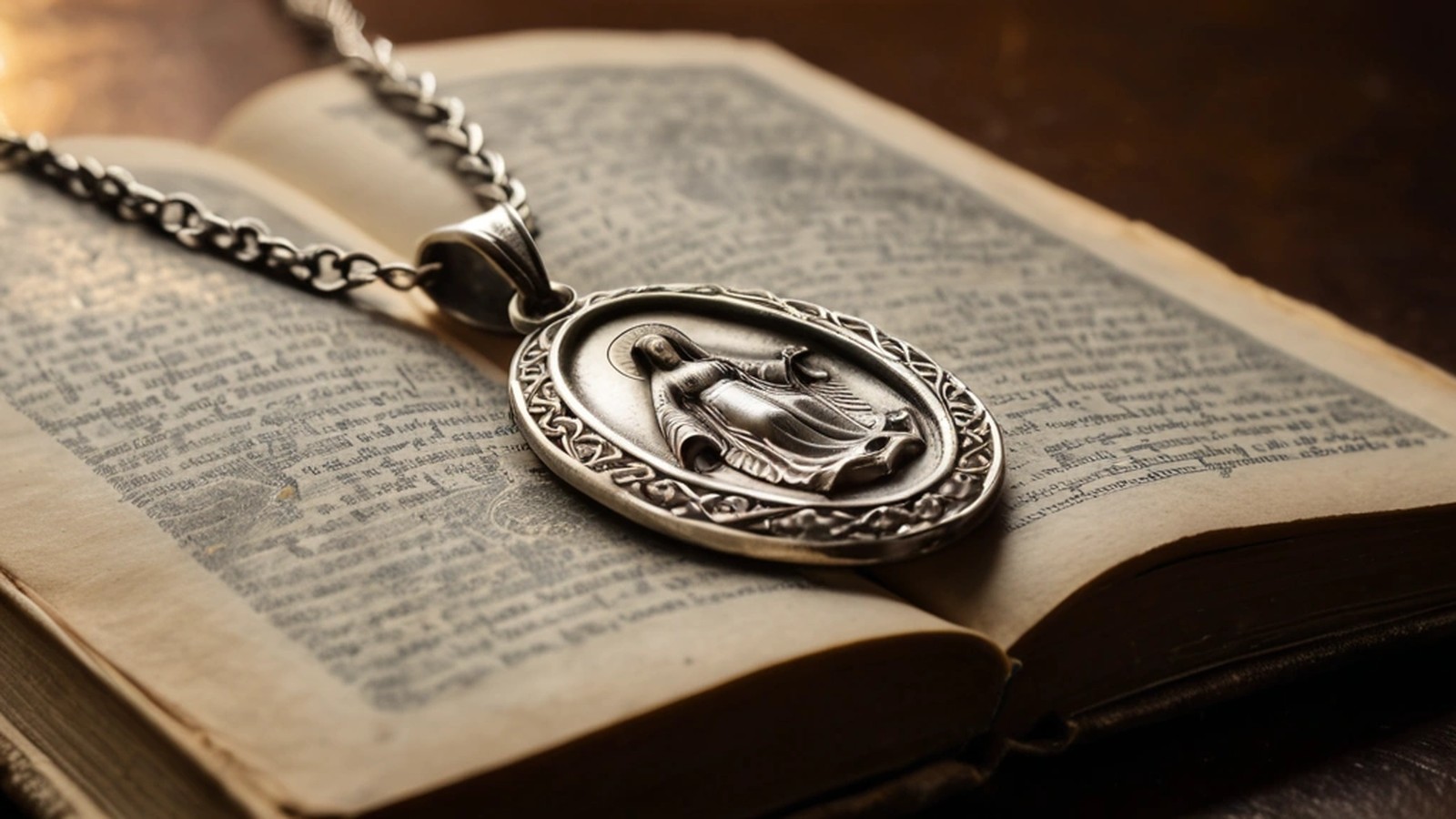
Short answer: The Miraculous Medal comes from apparitions of the Blessed Virgin Mary to St. Catherine Labouré, a young Daughter of Charity, in the chapel of her community’s motherhouse on the Rue du Bac in Paris in 1830. On November 27, 1830, Mary showed Catherine the design of a medal and asked that it be made, promising great graces to those who wear it with confidence. The front bears the prayer “O Mary, conceived without sin, pray for us who have recourse to thee.” It is not a charm. It is a sacramental: a sign that reminds us to pray and to entrust ourselves to Mary, who always leads us to her Son. The feast of Our Lady of the Miraculous Medal is kept on November 27, and St. Catherine’s feast follows on November 28.
In 2026, November 27 falls on the Friday after Thanksgiving, a good day to pause in the middle of the holiday rush, just two days before the First Sunday of Advent.
Who was St. Catherine Labouré?
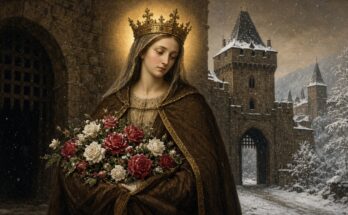
Catherine Labouré was born in 1806 to a farming family in Burgundy, France. Her mother died when she was a child, and tradition tells that young Catherine took a statue of Our Lady in her arms and asked Mary to be her mother from then on. As a young woman she entered the Daughters of Charity of St. Vincent de Paul, and in 1830 she was sent to the community’s motherhouse in Paris as a novice.
She would spend most of the rest of her life quietly caring for elderly men at the hospice of Enghien in Reuilly, on the east side of Paris. Almost no one knew she was the sister who had seen Our Lady. She kept the secret, sharing it only with her confessor, until shortly before her death on December 31, 1876. Pope Pius XII canonized her in 1947, and her body rests in the chapel on the Rue du Bac, where pilgrims still come to pray.
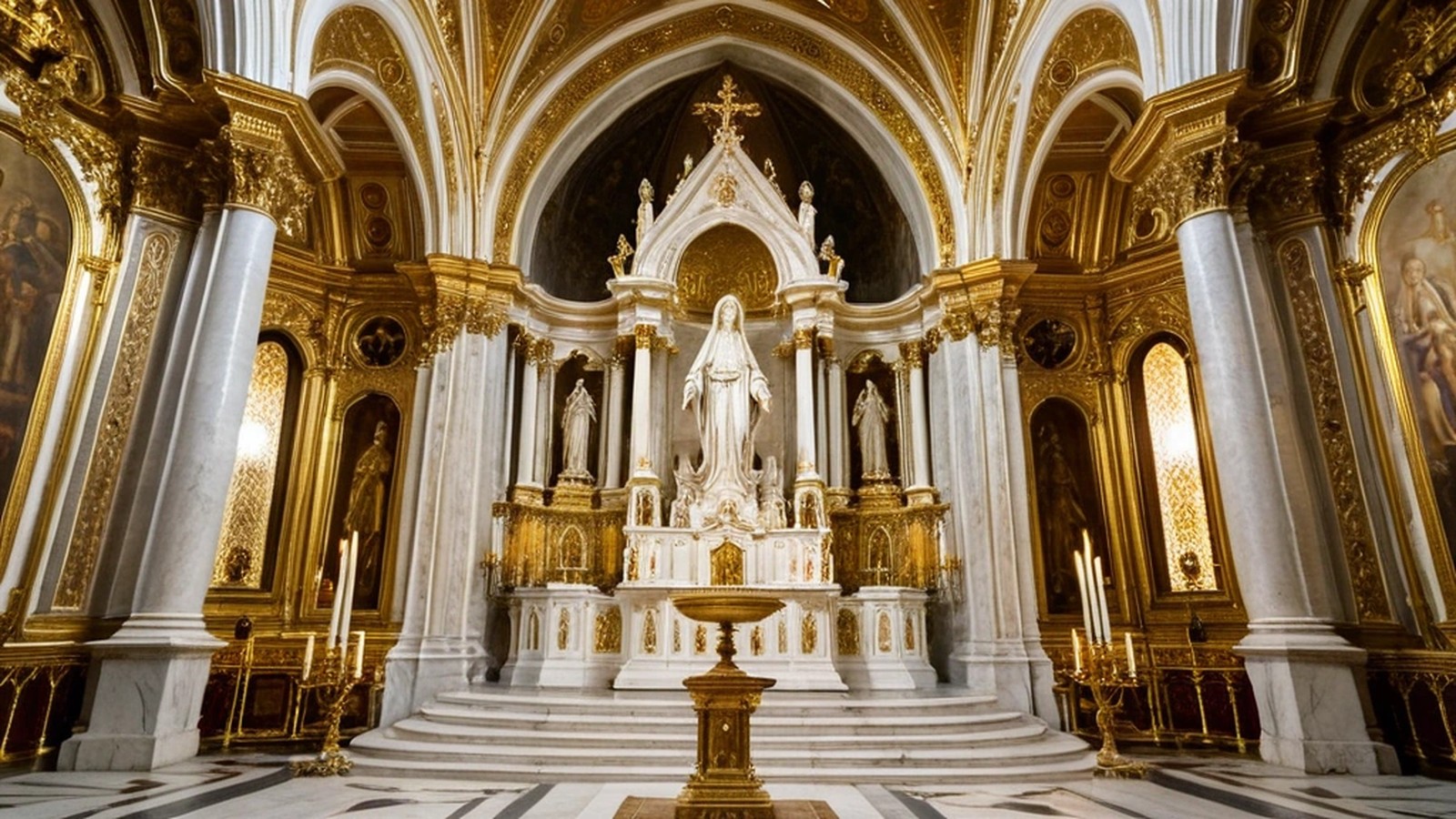
The apparitions of 1830
July 1830: “Come to the foot of the altar”
On the night of July 18–19, 1830, Catherine was awakened and led to the chapel, where Our Lady spoke with her for a long time. Mary spoke of hard times coming for France and invited all to come to the foot of the altar, where graces would be poured out on those who ask with confidence.
November 27, 1830: The medal
During evening prayer on November 27, Catherine saw Mary standing on a globe, rays of light streaming from her hands. Around her appeared the words: “O Mary, conceived without sin, pray for us who have recourse to thee.” Then the image turned, showing the design for the back of the medal. Catherine understood Mary’s request: have a medal struck in this form, and those who wear it with confidence will receive great graces.
With the approval of the Archbishop of Paris, the first medals were made in 1832.
What the images on the medal mean
The front:
- Mary standing on the globe, crushing the serpent beneath her feet, recalls God’s promise in Genesis 3:15 and her role as the new Eve.
- Rays of light from her hands represent the graces Mary obtains for those who ask her.
- The prayer “O Mary, conceived without sin” honors her Immaculate Conception, more than twenty years before Pope Pius IX formally defined that dogma in 1854. Our guide to the Immaculate Conception explains the feast on December 8.
- The year 1830 marks the apparition.
The back:
- The letter M with a cross above it shows Mary standing at the foot of the Cross, united with her Son.
- Two hearts: the Sacred Heart of Jesus crowned with thorns, and the Immaculate Heart of Mary pierced by a sword, recalling Simeon’s prophecy (Luke 2:35).
- Twelve stars recall the woman clothed with the sun in Revelation 12 and the twelve apostles, the foundation of the Church.
Why is it called “miraculous”?
It was first simply called the medal of the Immaculate Conception. As it spread across France, including during the cholera epidemic that struck Paris in 1832, so many people reported conversions, healings and protection that ordinary Catholics began calling it the “miraculous” medal, and the name stuck.
The best-known story is that of Alphonse Ratisbonne, a young Jewish man from Strasbourg who was openly hostile to the Church. While visiting Rome, a friend persuaded him to wear the medal and say a short prayer to Mary. On January 20, 1842, while waiting in the church of Sant’Andrea delle Fratte, he reported seeing Our Lady as she appears on the medal. He was baptized soon after and later became a priest. A century later, St. Maximilian Kolbe made the medal central to his mission, giving it to countless people and calling it a powerful means of bringing souls to Christ.
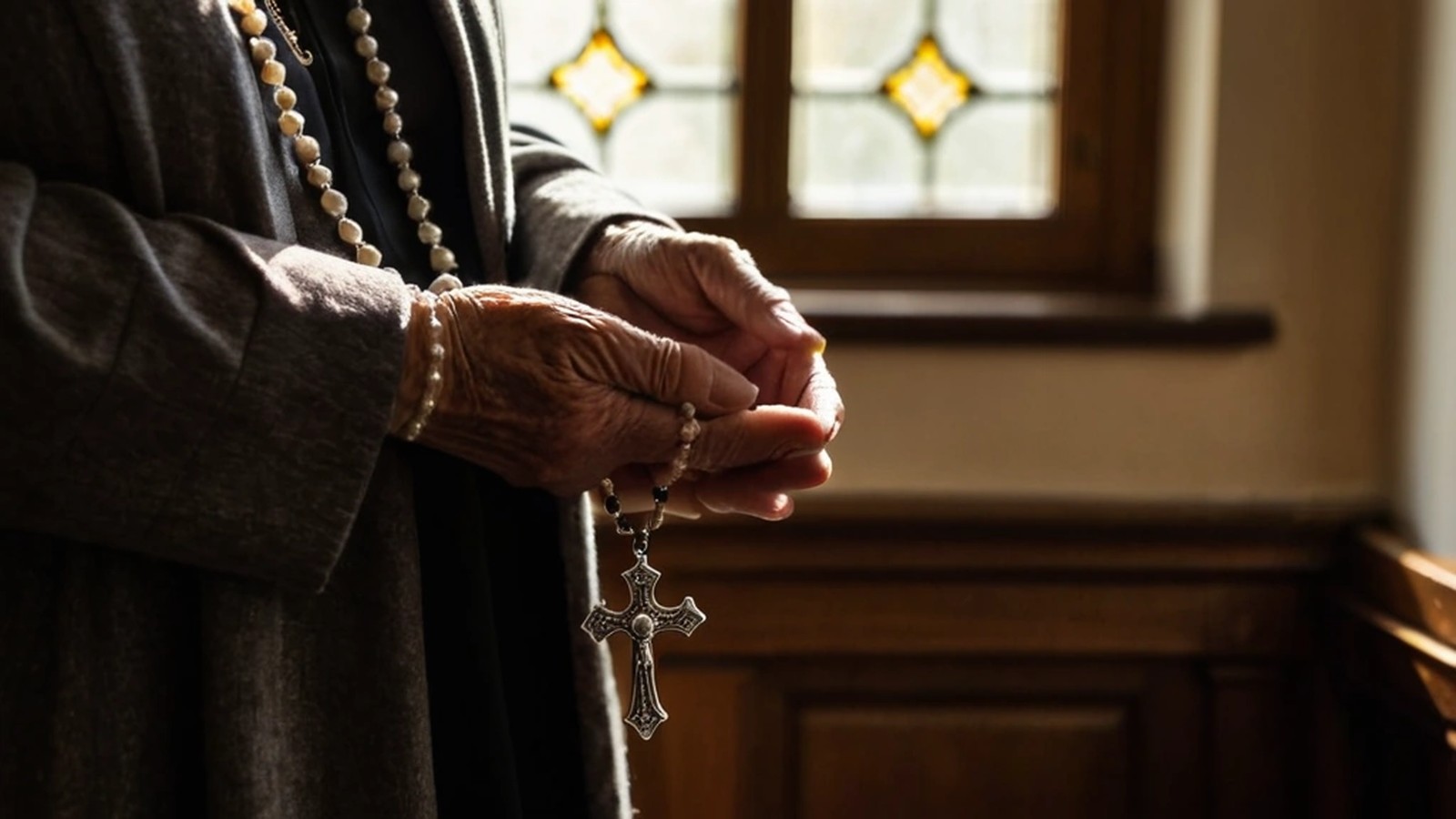
How to wear the medal faithfully
The Miraculous Medal is a sacramental, not magic. The Church teaches that sacramentals prepare us to receive grace and help us cooperate with it. Their power comes through the prayer of the Church and our own faith, not from the metal. To wear it well:
- Have it blessed. Any priest can bless a medal. Some parishes also offer the traditional rite of enrollment in the Miraculous Medal.
- Wear it with confidence in Mary’s prayers, around your neck, on a rosary or clipped to a bag.
- Pray the medal’s prayer daily: “O Mary, conceived without sin, pray for us who have recourse to thee.”
- Let it lead you to the sacraments. Mary always points us to Jesus: Sunday Mass, confession and a life of charity.
- Share it. Many Catholics keep extra medals to give to friends, the sick or anyone who is struggling, just as Catherine’s sisters did in 1832.
Ways to honor the feast on November 27
- Attend Mass, if you can, and ask Our Lady’s help for your family.
- Pray a decade or the full Rosary. Our step-by-step Rosary guide is a good place to start.
- Give a blessed medal to someone you are praying for.
- Ask St. Catherine Labouré, whose feast is November 28, for the grace of quiet, faithful service.
- Prepare your heart for Advent, which begins Sunday, November 29, 2026.
Frequently asked questions
Is the Feast of Our Lady of the Miraculous Medal a holy day of obligation? No. It is a feast kept especially by the Vincentian family (the Congregation of the Mission and the Daughters of Charity) and in many parishes, but it is not a day of obligation.
Can non-Catholics wear the Miraculous Medal? Yes. Many conversions have begun with someone simply agreeing to wear it. It’s best worn with an open heart and a willingness to pray.
Does the medal have to be silver or gold? No. Medals come in many metals and sizes. What matters is faith and prayer, not the material.
What should I do with an old or broken blessed medal? Blessed objects should be disposed of respectfully, traditionally by burying them. Many people also return them to a parish.
Keep the faith close this Advent
The Miraculous Medal is a small, simple reminder that we never pray alone: our Mother is praying with us. As Advent approaches, Walsingham Radio shares the truth of the Catholic faith 24/7. Listen to our streams, and see our Advent 2026 guide for more ways to pray the season.