Short answer: Las Posadas (“the inns” or “the lodgings”) is a nine-night Catholic devotion, beloved in Mexico and in Hispanic communities across the United States, that reenacts Joseph and Mary’s search for a place to stay in Bethlehem. Each evening from December 16 to December 24, a procession led by people portraying (or carrying images of) the Holy Family goes from door to door, sings a request for shelter, is turned away, and is finally welcomed in for prayer, food and celebration. In 2026, Las Posadas begins on Wednesday, December 16 and ends on Christmas Eve, Thursday, December 24.
It is a popular devotion, not part of the Church’s official liturgy, but it carries deep Gospel meaning and has been passed down in Catholic families for more than four centuries.
The Gospel story behind Las Posadas
The tradition is rooted in St. Luke’s account of the Nativity. Because of the census ordered by Caesar Augustus, Joseph traveled with Mary, who was with child, from Nazareth to Bethlehem, the city of David. There Mary “gave birth to her firstborn son. She wrapped him in swaddling clothes and laid him in a manger, because there was no room for them in the inn” (Luke 2:7).
Las Posadas turns that one line into a lived prayer. Participants walk with the Holy Family, feel the sting of their rejection, and then do what Bethlehem did not: open the door and welcome them in.
Where the tradition comes from
Las Posadas grew out of Christmas evangelization in New Spain (colonial Mexico) in the late 1500s. Tradition credits Augustinian friars at the monastery of San Agustín Acolman, near Mexico City, with holding special Masses and celebrations on the nine days before Christmas, known as the misas de aguinaldo. Over time, the devotion moved from the churches into neighborhoods and homes, taking on the form families know today: the procession, the sung dialogue at the door, the Rosary and the fiesta afterward.
The nine nights are commonly explained as a Christmas novena and as a reminder of the nine months Mary carried Jesus in her womb.
How a posada works
While customs vary by region and family, a traditional posada follows this pattern:
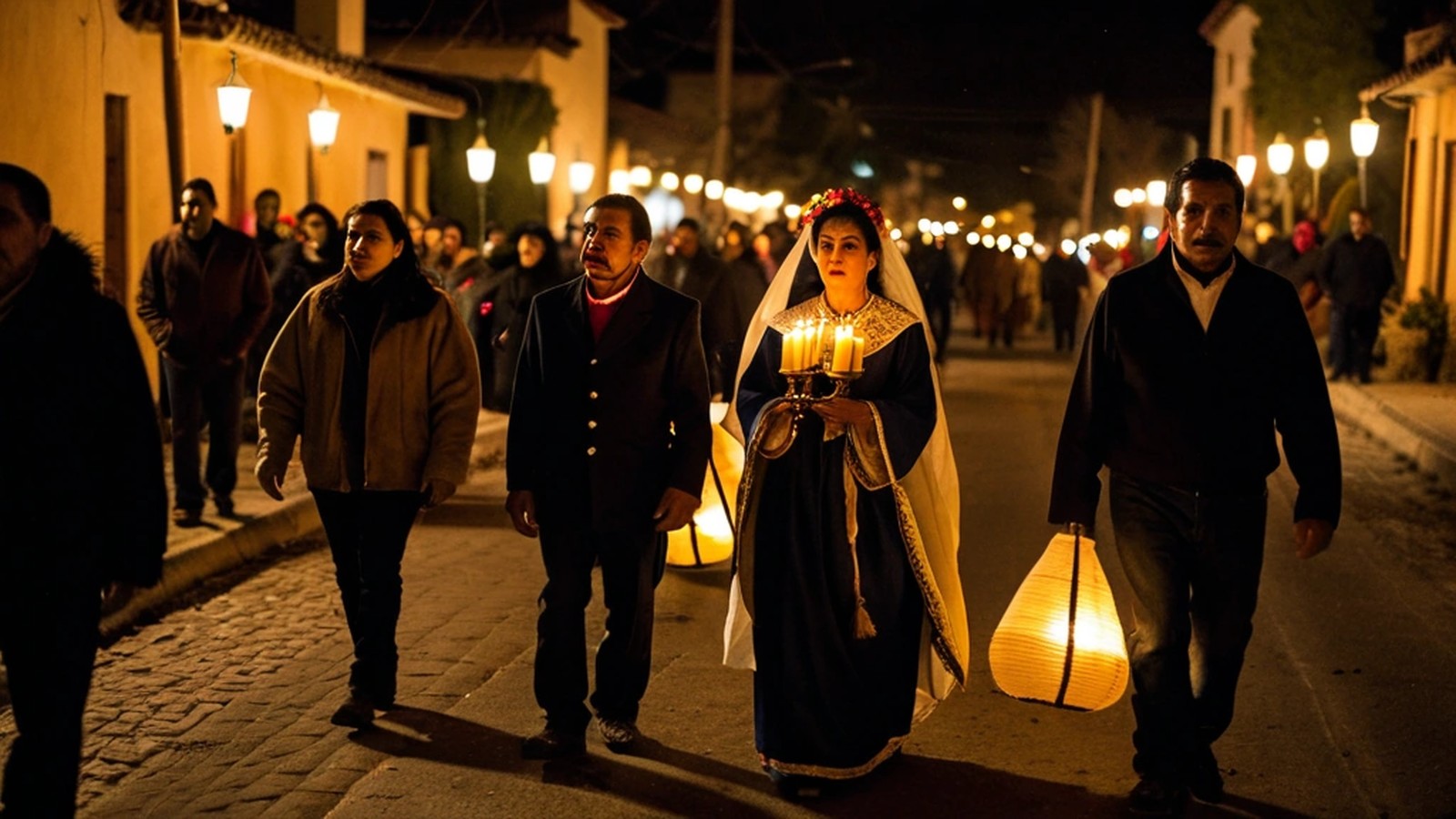
- The procession gathers. Two people play Mary and Joseph, or participants carry statues or an image of the Holy Family. Sometimes Mary rides a donkey. Others follow with candles, often carrying small paper lanterns.
- The pilgrims ask for shelter. At each door, the group outside (the peregrinos, or pilgrims) sings the traditional verses asking for lodging, beginning with “En nombre del cielo, os pido posada” (“In the name of heaven, I ask you for shelter”).
- The innkeepers refuse. People inside the house answer in song, turning them away.
- The door finally opens. At the last house, the hosts recognize the Holy Family and sing “Entren, santos peregrinos” (“Come in, holy pilgrims”), welcoming everyone inside.
- Prayer comes first. Families typically pray the Rosary or other prayers, read Scripture and sing villancicos (Christmas carols).
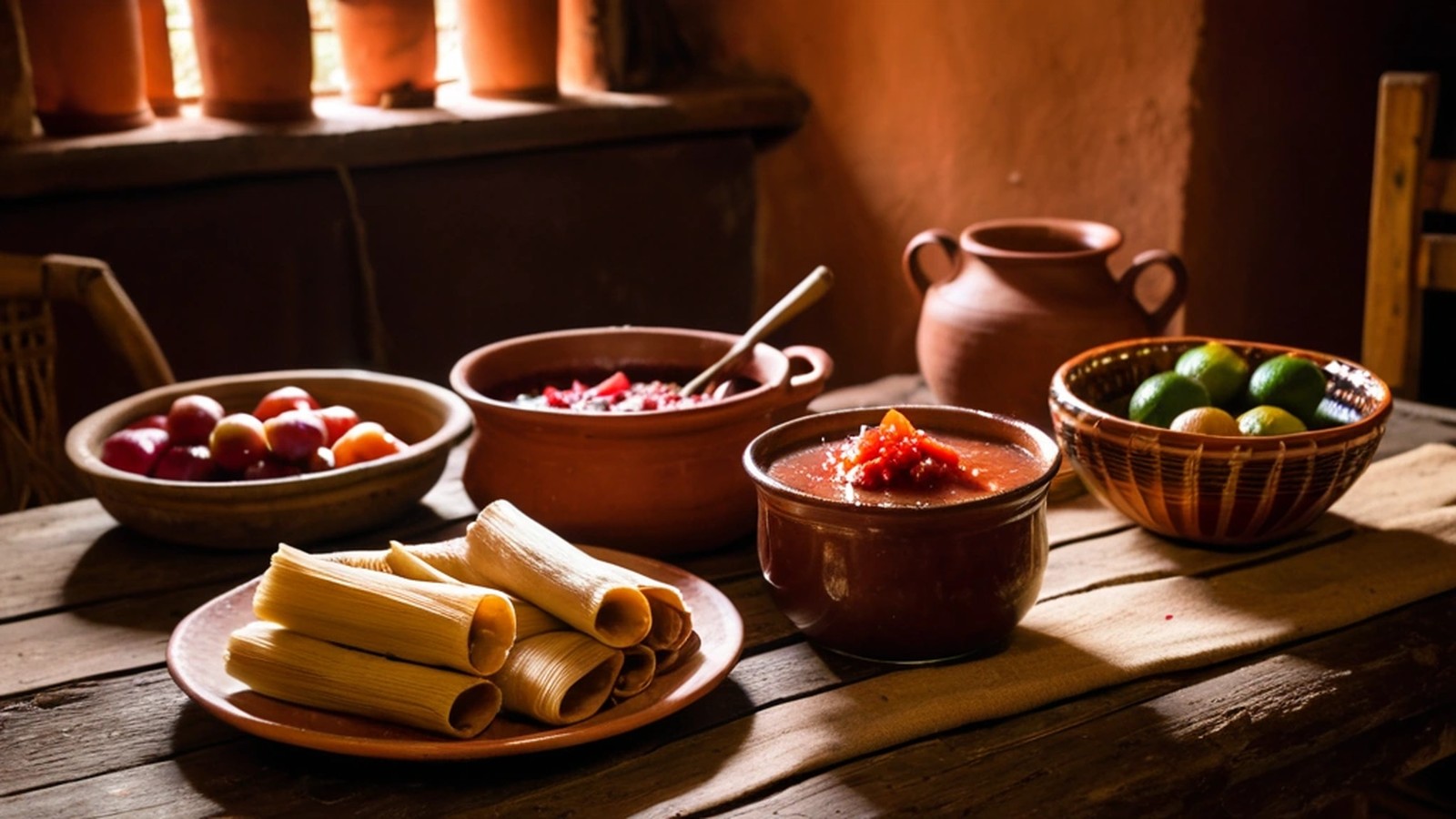
- Then the fiesta. Hosts share tamales, ponche (a warm fruit punch with cinnamon), sweet breads and aguinaldos (small bags of candy and fruit for children), and the children break a piñata.
On December 24, the final posada often leads into Christmas Eve Mass, and the Christ Child is placed in the manger.
The meaning of the piñata
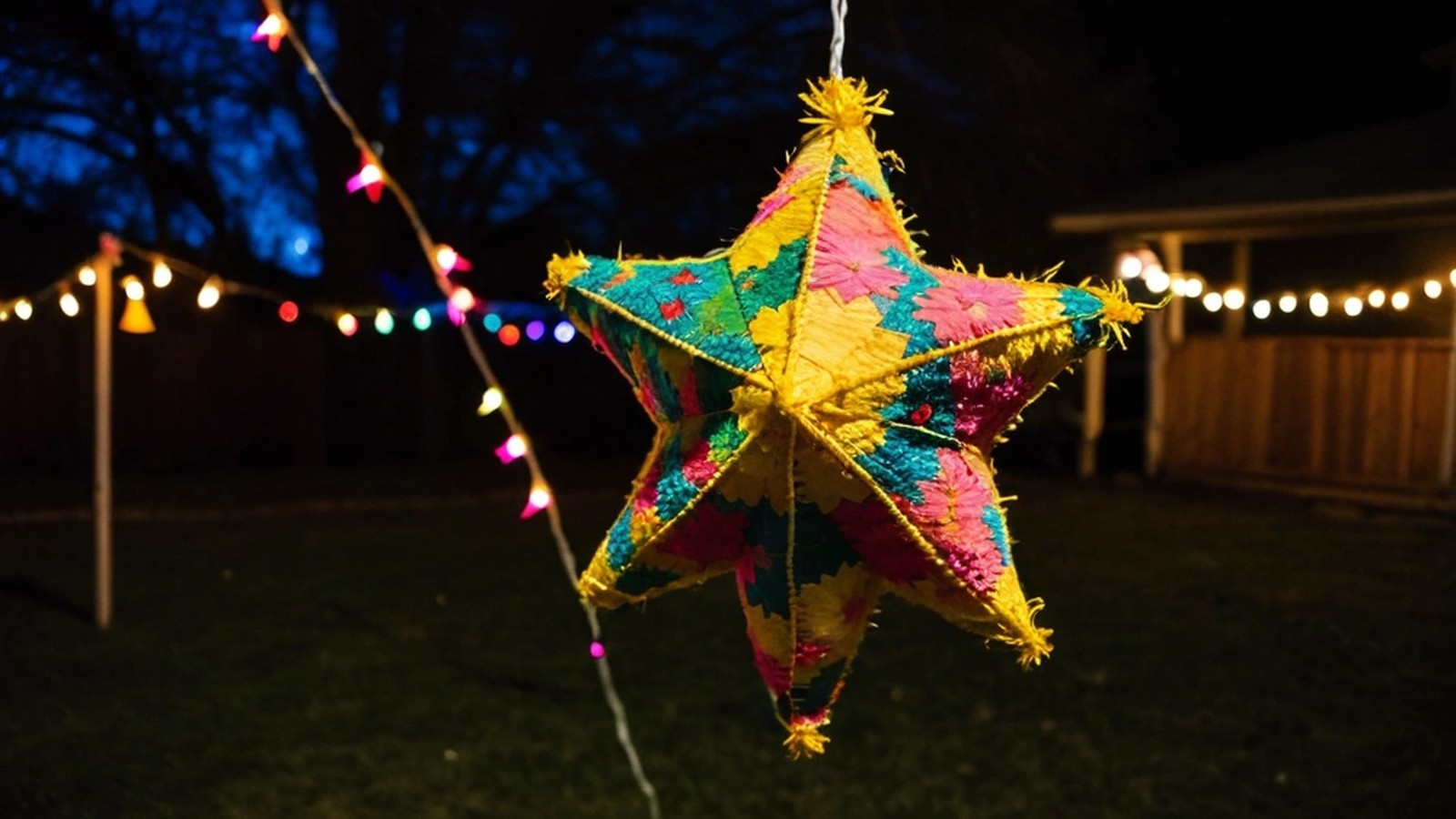
A popular catechetical explanation gives the classic seven-pointed star piñata a spiritual meaning. The seven points are said to represent the seven deadly sins; the bright, tempting decorations stand for the allure of sin; the blindfold represents faith; and the stick represents the strength to fight temptation. When the piñata breaks, the sweets that fall are the gifts of grace. It’s a folk explanation rather than formal Church teaching, but it’s a fun way to teach children about virtue.
Why the Church values devotions like this
The Catechism of the Catholic Church teaches that the Church’s sacramental life is surrounded by “various forms of piety” among the faithful, including processions and other popular devotions, which “extend the liturgical life of the Church, but do not replace it” (CCC 1674–1675). Las Posadas does exactly that. It prepares hearts for Christmas, gathers families and neighbors, and leads people to Mass.
It also carries a challenge for today: welcoming the stranger, the poor and the family with nowhere to go. Christ said, “I was a stranger and you welcomed me” (Matthew 25:35).
How to host Las Posadas at home or in your parish
- Keep it simple. Even one evening counts. Choose a night between December 16 and 24, and gather a few families.
- Plan the route. Use several homes on a street, rooms inside one house, or stations around a parish hall.
- Print the verses. Hand out the traditional Spanish verses (with an English translation if needed) so everyone can sing.
- Put prayer at the center. Pray a decade or the full Rosary, read Luke 2:1–7 and close with a blessing.
- Share the meal. Ask each family to bring a dish. Tamales and ponche are traditional.
- Include the kids. Let children play Mary, Joseph, shepherds or angels, and save the piñata for last.
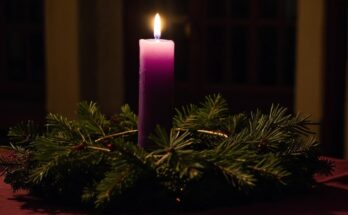
- Connect it to the season. Light your Advent wreath during the evening, and remember that just before the posadas begin, the Church celebrates Our Lady of Guadalupe on December 12.
Frequently asked questions
What are the dates of Las Posadas in 2026? Wednesday, December 16 through Thursday, December 24, 2026.
Is Las Posadas a Catholic tradition? Yes. It’s a Catholic popular devotion that began in colonial Mexico. It isn’t a holy day or part of the official liturgy, so attendance is not required, but it’s a beautiful way to prepare for Christmas.
Do you have to speak Spanish to celebrate Las Posadas? No. Many parishes celebrate bilingually, and the meaning is the same in any language.
What do you serve at a posada? Tamales, ponche, buñuelos, sweet breads, hot chocolate and aguinaldos for the children are common.
Prepare for Christmas with Walsingham Radio
Las Posadas asks a simple question: will we make room for Jesus? This Advent, open your door and your heart. Walsingham Radio shares the truth of the Catholic faith 24/7. Tune in to our streams and shows as you prepare for Christmas, and see our Advent 2026 guide for more ways to pray the season.