On Monday, November 30, 2026, the Church keeps the feast of St. Andrew the Apostle, brother of St. Peter, patron of Scotland, Greece, and Russia, and the saint the Eastern Churches call the Protokletos, the “First-Called.” In the traditional calendar of the 1962 Missal it is a feast of the second class, and in the current Roman calendar it is a Feast, so the whole Roman Rite honors him together. This year the feast falls on the day after the First Sunday of Advent, and that is fitting: St. Andrew’s Day has long been the doorway into the Advent season, and it opens one of the most beloved Catholic devotions of the year, the St. Andrew Christmas Novena.
The First to Follow
St. John’s Gospel tells us that Andrew was a disciple of John the Baptist. When the Baptist saw Jesus passing by and said, “Behold the Lamb of God,” Andrew and another disciple followed Our Lord, and He asked them, “What seek you?” They answered, “Rabbi, where dwellest thou?” and He said, “Come and see” (John 1:36-39). They stayed with Him that day. Andrew’s first act afterward was to find his brother Simon and tell him, “We have found the Messias,” and he brought him to Jesus (John 1:41-42). The first apostle to be called was also the first to bring another soul to Christ, and the soul he brought became the first Pope.
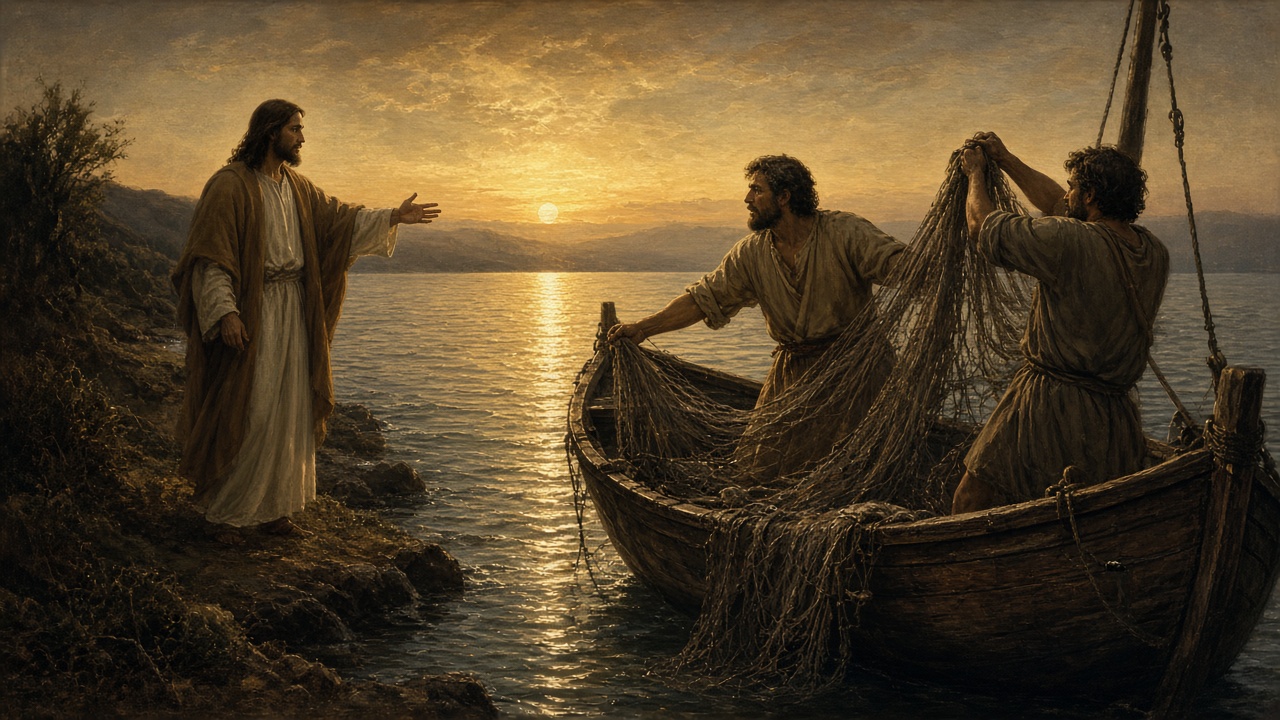
St. Matthew’s account, read in the Gospel of the traditional Mass of the feast (Matthew 4:18-22), shows the call by the Sea of Galilee: Jesus saw “Simon who is called Peter, and Andrew his brother, casting a net into the sea,” and said, “Come ye after me, and I will make you to be fishers of men. And they immediately leaving their nets, followed him.” There is no delay and no bargaining. That word immediately is St. Andrew’s whole spirituality.
The Apostle Who Brought People to Jesus
Andrew appears only a few times in the Gospels, but nearly every time he is bringing someone to Our Lord. At the feeding of the five thousand, it is Andrew who says, “There is a boy here that hath five barley loaves, and two fishes” (John 6:9), the small offering Christ multiplied for the crowd, a sign that points to the Holy Eucharist. When some Greeks came to Philip asking, “Sir, we would see Jesus,” Philip went to Andrew, and the two of them brought the request to the Lord (John 12:20-22). He is the patron of every Catholic who quietly invites a friend, a coworker, or a family member to “come and see.”
The Catechism teaches that the Apostles are the foundation on which Christ built His Church: “The Lord Jesus endowed his community with a structure that will remain until the Kingdom is fully achieved. Before all else there is the choice of the Twelve with Peter as their head” (CCC 765). Andrew stands at the very beginning of that structure, as the one who led Peter to Christ.
Martyrdom on the Cross at Patras
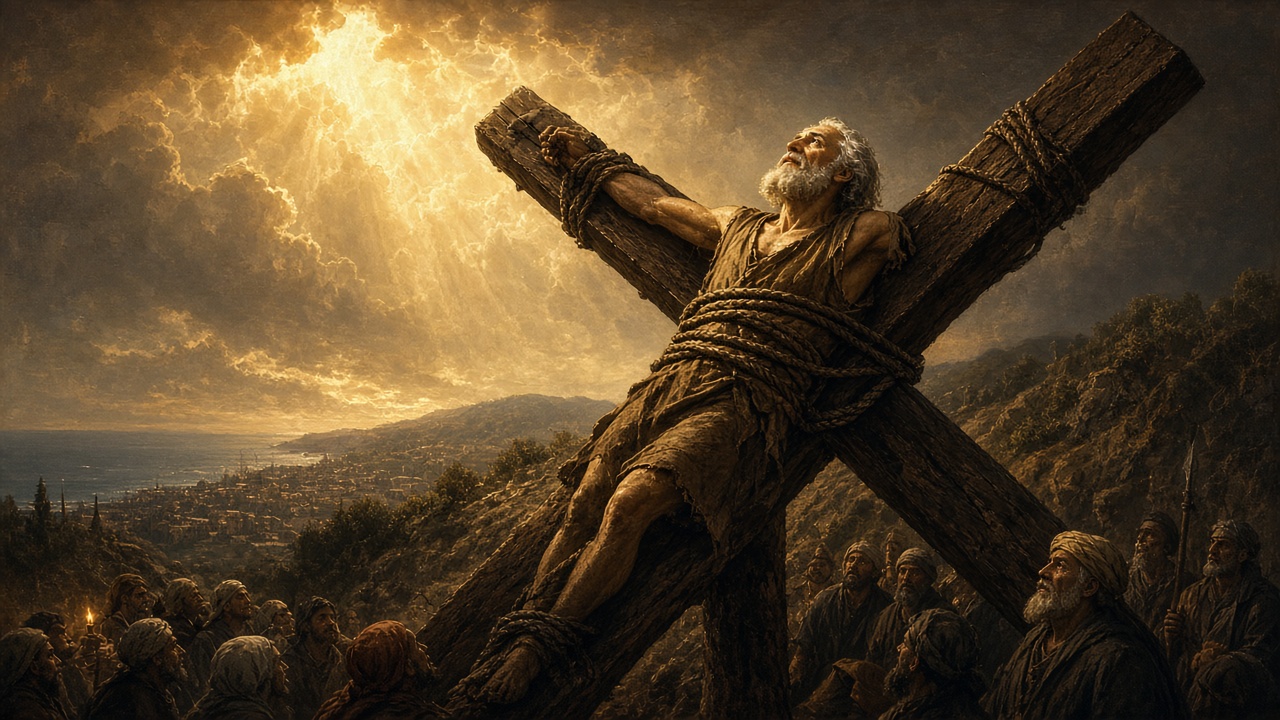
After Pentecost, ancient tradition holds that Andrew preached in Scythia, along the Black Sea, and in Greece. According to the old acts of his passion, he was condemned at Patras in Achaia and bound, not nailed, to a cross so that his suffering would last longer. The 1911 Catholic Encyclopedia notes that the tradition of an X-shaped cross, the crux decussata, is a later one, but it has become his emblem everywhere, and it is the white saltire on the flag of Scotland. The same old account gives the words Andrew is said to have spoken when he saw the cross, which the traditional Breviary still sings on his feast: “O bona crux, O good cross, long desired, ardently loved, unceasingly sought, and now at last prepared for my longing soul.” He is said to have preached to the crowd from the cross for two days before he died.
His relics have a long history of their own. Many were taken to Constantinople in the fourth century, and in 1208 they were brought to the Cathedral of Sant’Andrea in Amalfi, Italy, where they are venerated to this day. In 1964 Pope St. Paul VI returned the relic of St. Andrew’s head to Patras as a gesture of reconciliation with the Orthodox, and each year the Holy See sends a delegation to the Ecumenical Patriarch in Constantinople for the feast, since Andrew is honored as the founder of that see, just as Peter is honored in Rome.
The Mass of the Feast
In the traditional Roman Missal the Introit is taken from Psalm 138: “Mihi autem nimis honorati sunt amici tui, Deus,” “To me thy friends, O God, are made exceedingly honorable: their principality is exceedingly strengthened.” The Epistle (Romans 10:10-18) could have been written for Andrew: “How beautiful are the feet of them that preach the gospel of peace… Their sound hath gone forth into all the earth, and their words unto the ends of the whole world.” Before 1955 the day before the feast was kept as the Vigil of St. Andrew, the first vigil of the liturgical year, a small penitential preparation that suits the beginning of Advent well.
The St. Andrew Christmas Novena
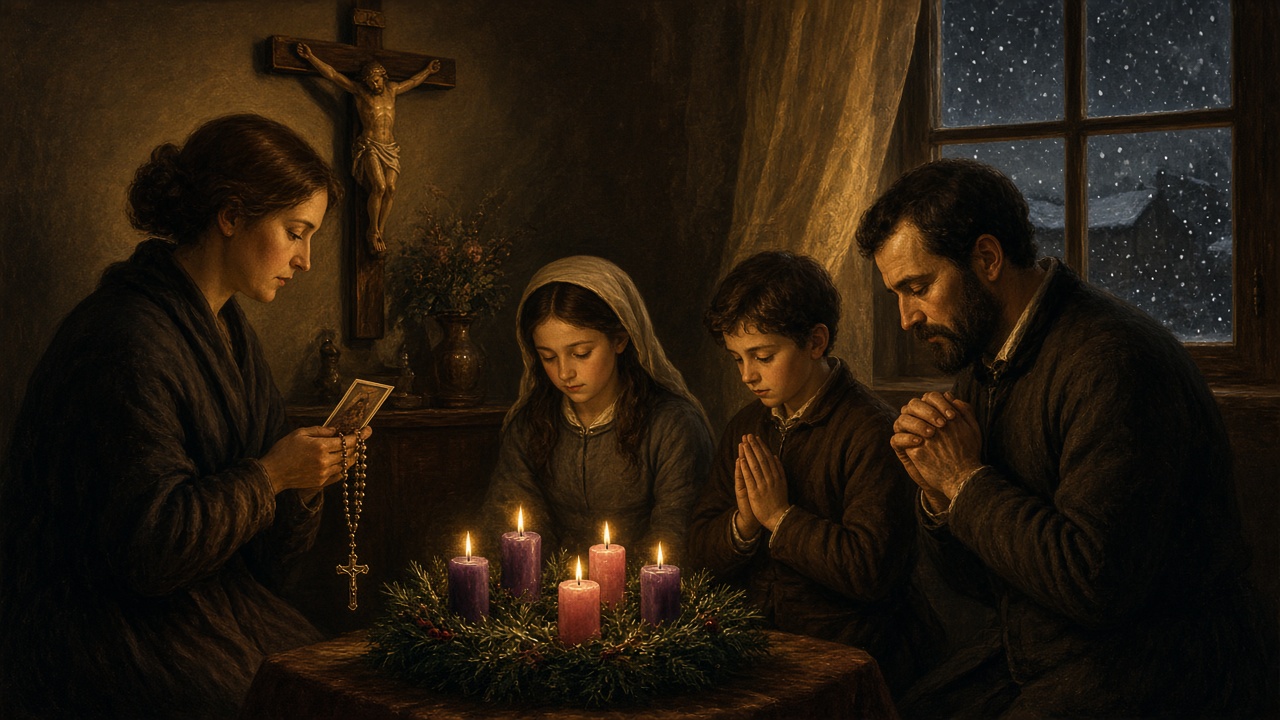
Beginning on St. Andrew’s Day and continuing until Christmas Eve, many Catholic families pray a short prayer fifteen times each day. It is called the St. Andrew Christmas Novena, though it is not a novena in the usual nine-day sense and the prayer itself is addressed to God, meditating on the hour of Christ’s birth. It is commonly said to have been approved with an imprimatur in New York in 1897. Many people pray it with a rosary or a simple count of fifteen, morning and evening, and offer it for a particular intention.
Hail and blessed be the hour and moment in which the Son of God was born of the most pure Virgin Mary, at midnight, in Bethlehem, in piercing cold. In that hour vouchsafe, I beseech Thee, O my God, to hear my prayer and grant my desires, through the merits of Our Savior Jesus Christ, and of His blessed Mother. Amen.
The St. Andrew Christmas Novena: pray it 15 times a day from November 30 until Christmas.
How to Keep the Feast
- Assist at Holy Mass on Monday if you can, or read Matthew 4:18-22 and John 1:35-42 at home.
- Begin the St. Andrew Christmas Novena and choose one intention to carry all the way to Christmas.
- Bring someone to Christ, as Andrew brought Peter: invite a friend to Mass, to Confession, or to an Advent devotion.
- Embrace your own cross, praying with St. Andrew, “O good cross,” over a hardship you are carrying this Advent.
- Pray for Christian unity, especially between Rome and the Orthodox East, who share devotion to the brothers Peter and Andrew.
The Collect of the Feast
We humbly entreat Thy majesty, O Lord, that, as the blessed Apostle Andrew was once a teacher and ruler of Thy Church, so he may be a constant intercessor for us before Thee. Through Our Lord Jesus Christ, Thy Son, who liveth and reigneth with Thee in the unity of the Holy Ghost, God, world without end. Amen.
From the traditional Roman Missal, November 30.
St. Andrew, first-called of the Apostles, who left your nets at once to follow the Lamb of God, pray for us, that we may follow Him without delay this Advent. Stay with us here at Walsingham Radio for more traditional Catholic programming and devotions through the holy season.