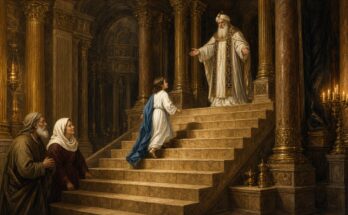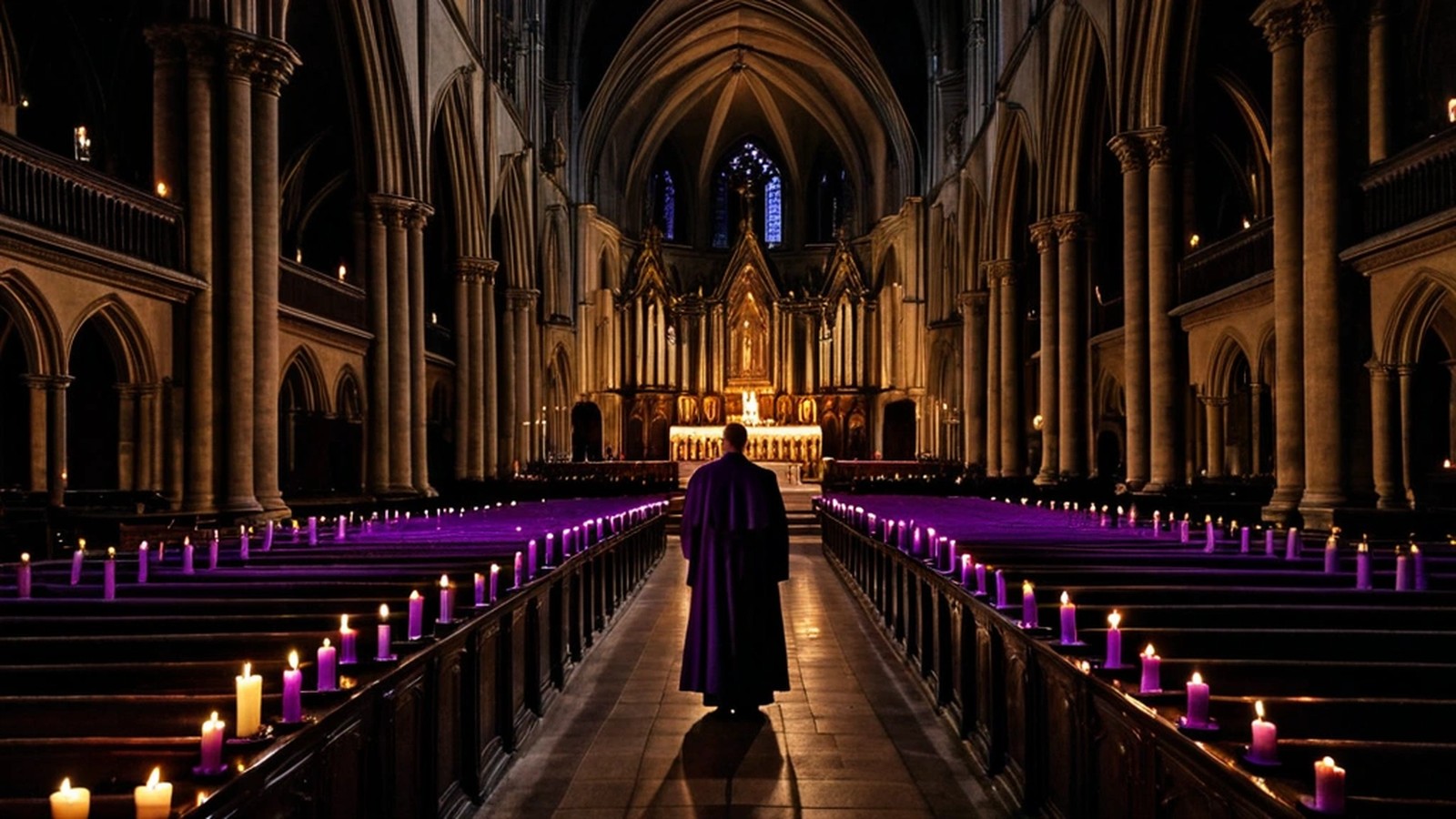
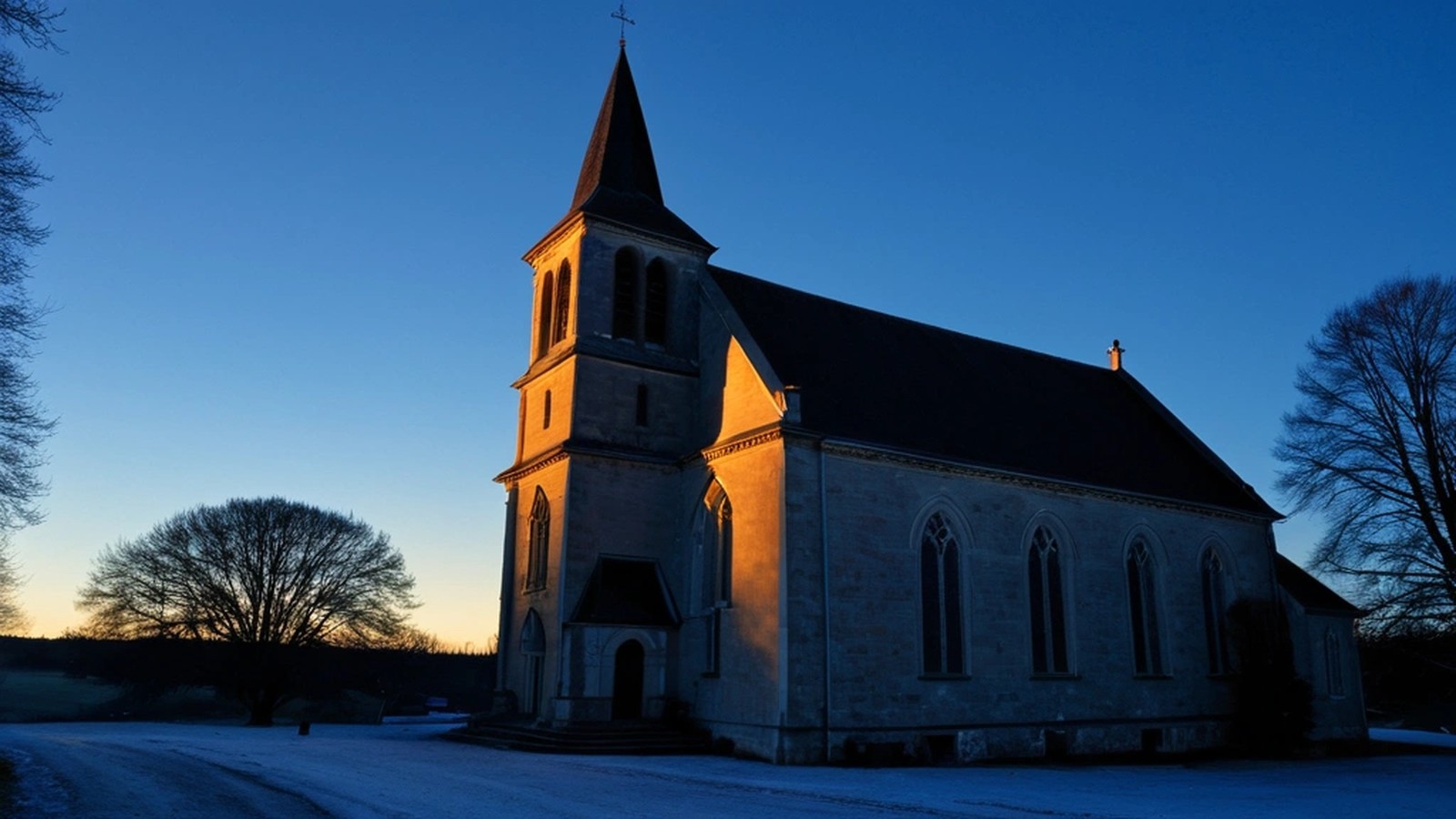
Short answer: A Rorate Mass (or Rorate Caeli Mass) is a Mass in honor of the Blessed Virgin Mary celebrated during Advent before sunrise, traditionally in a church lit only by candles. Its name comes from the first words of its entrance chant, taken from Isaiah 45:8: “Rorate, caeli, desuper, et nubes pluant iustum”, “Drop down dew, ye heavens, from above, and let the clouds rain the just.” As the Mass goes on, the light of dawn slowly fills the church, a living picture of Christ, the Light of the World, coming into our darkness. Advent 2026 begins on Sunday, November 29, so now is the time to look for a Rorate Mass near you.
With the Solemnity of Christ the King this Sunday, November 22, the Church closes her year. One week later, a new year begins in quiet expectation. Few Advent traditions capture that expectation as beautifully as the Rorate Mass.
Where the name comes from
Many Masses are known by the first word of their introit, the entrance chant. The traditional votive Mass of Our Lady in Advent begins with Isaiah’s prayer for the Savior:
“Drop down dew, ye heavens, from above, and let the clouds rain the just: let the earth be opened, and bud forth a saviour.” (Isaiah 45:8, Douay-Rheims)
The same words open the Fourth Sunday of Advent and are sung in the beloved Advent chant Rorate Caeli, with its refrain asking heaven to send the Just One. The Gospel of this Marian Mass is the Annunciation (Luke 1:26–38), when the angel Gabriel announces to Mary that she will bear the Son of God, and Mary answers, “Be it done unto me according to thy word.”
What happens at a Rorate Mass
A Rorate Mass is a Mass like any other in its essentials: the readings, the Eucharistic Prayer, Holy Communion. What sets it apart is the setting and the hour.
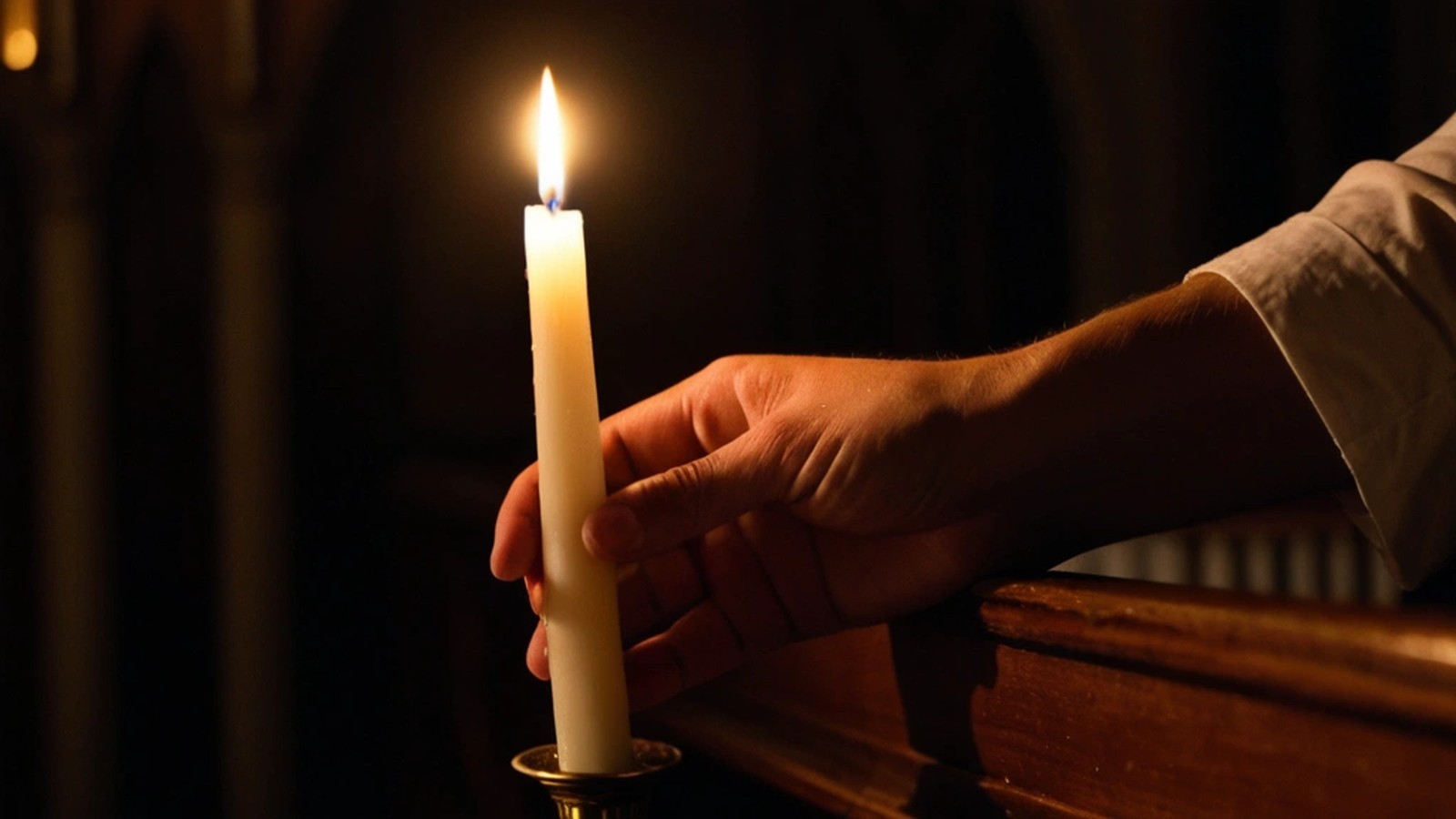
- It begins in darkness. Often the electric lights stay off. The church is lit by candles on the altar and, in many parishes, by candles held by the faithful.
- It is offered before dawn. Times like 6:00 or 6:30 a.m. are common, so that the Mass ends as daylight begins to come through the windows.
- The music is simple and ancient. Gregorian chant, the Rorate Caeli, and Advent hymns like “O Come, O Come, Emmanuel” are typical.
- The priest wears violet, the color of Advent, or white when the Mass is celebrated in honor of Our Lady.
The tradition is especially strong in Central Europe. In Austria and Germany it is known as the Rorate-Messe, and in Poland the Roraty are offered on Advent mornings, with children carrying lanterns and a special candle, the roratka, placed near the altar as a sign of Mary. In recent years many parishes in the United States have rediscovered the custom, in both the Ordinary and the Extraordinary Form.
Why light and darkness?
Advent is a season of waiting in the dark for the light. The prophet Isaiah wrote, “The people that walked in darkness have seen a great light” (Isaiah 9:2). St. John calls Christ “the true light, which enlighteneth every man” (John 1:9).
The Rorate Mass lets us feel that truth in our bodies. We arrive in the cold and dark. We pray by candlelight. And by the time we leave, the sun is up.
Mary has long been compared to the dawn, because the dawn comes just before the sun. She is the one through whom the “Sun of Justice” (Malachi 4:2) rises on the world. That is why this early-morning Mass is offered in her honor, and why it fits so naturally in a season she lived more deeply than anyone: waiting for the birth of her Son.
How to find a Rorate Mass in Advent 2026
Advent 2026 runs from Sunday, November 29, to Christmas Eve, Thursday, December 24. Rorate Masses are most often scheduled on weekday or Saturday mornings in Advent. To find one:
- Check your parish bulletin and website in late November.
- Look at nearby parishes, especially those with a strong music program or a Latin Mass community.
- Ask your diocese, which may list special Advent liturgies.
- Call the parish office if a schedule says “candlelight Mass” or “dawn Mass.” That is often a Rorate Mass under another name.
The exact prayers and readings depend on the day and the rubrics of the Missal, so one parish’s Rorate Mass may look a little different from another’s.
How to prepare and take part
- Set two alarms and lay out warm clothes the night before.
- Arrive early. It takes a few minutes for eyes to adjust to candlelight, and quiet time before Mass is a gift.
- Bring a small flashlight or use your phone’s light only to find your seat, then put it away.
- Go to confession beforehand if you can. Many parishes add confession times in Advent. Our step-by-step confession guide can help.
- Bring the family. Children often remember a candlelit Mass for years. Breakfast together afterward makes it a tradition.
- Pray with Mary. Offer the Mass for an intention, perhaps praying the Angelus or the Joyful Mysteries of the Rosary on the drive.
Frequently asked questions
Is a Rorate Mass a Latin Mass? It can be, but it doesn’t have to be. Rorate Masses are celebrated in the Extraordinary Form and, in many parishes, in the Ordinary Form in English or other languages.
Does a Rorate Mass fulfill my Sunday obligation? Only if it is celebrated on Sunday or on Saturday evening as a Sunday Mass. A weekday or Saturday-morning Rorate Mass does not replace Sunday Mass.
Can I hold a candle during Mass? Many parishes hand out candles. Follow the ushers’ directions for safety and when to light them.
When does Advent begin in 2026? The First Sunday of Advent is November 29, 2026. Our Advent 2026 guide has more ways to pray the season, and the O Antiphons carry the waiting into its final week.
Wait for the Light with us
Walsingham Radio shares the truth of the Catholic faith 24/7. On your way to a dark-morning Mass this Advent, or anytime you need a moment of prayer, listen to our streams. Our Lady of Walsingham, pray for us, and help us keep watch for your Son.