On Monday, November 16, 2026, the Church keeps the feast of St. Gertrude the Great, virgin, Benedictine nun of Helfta in Saxony, and one of the first great mystics of the Heart of Jesus. In the traditional calendar of the 1962 Missal her feast is a third-class day on November 16, and in the current Roman calendar it is an optional memorial on the same date, so whether you assist at the Latin Mass or a reverent Ordinary Form parish, this is a day to know her. She is the only woman saint whom the Church has come to call “the Great.”
A Child Given to God
Gertrude was born on January 6, 1256, the feast of the Epiphany. Nothing is known for certain of her family. At the age of five she was entrusted to the Benedictine (Cistercian-influenced) monastery of Helfta, then one of the most learned convents in Christendom, under the wise Abbess Gertrude of Hackeborn and her sister St. Mechtilde. There the young Gertrude proved a brilliant student of Latin, literature, music, and the liberal arts.
As Pope Benedict XVI noted in his general audience on St. Gertrude (October 6, 2010), she was “an exceptional woman, endowed with special natural talents and extraordinary gifts of grace.” Yet by her own admission her studies had become a kind of vanity, a “tower of vanity and curiosity” built up even while she wore the habit.
The Conversion of January 27, 1281
In Advent of 1280 a deep restlessness came over her. Then, on the evening of January 27, 1281, toward the hour of Compline, Our Lord appeared to her as a gracious young man and said, in substance, that her salvation was near and that she should not be sorrowful. From that day her life turned wholly toward Him. She set aside secular learning for Sacred Scripture, the Fathers, and the sacred liturgy, and for the next twenty years she lived in an ever closer union with Christ until her death on November 17, around 1301 or 1302.
The Herald of Divine Love
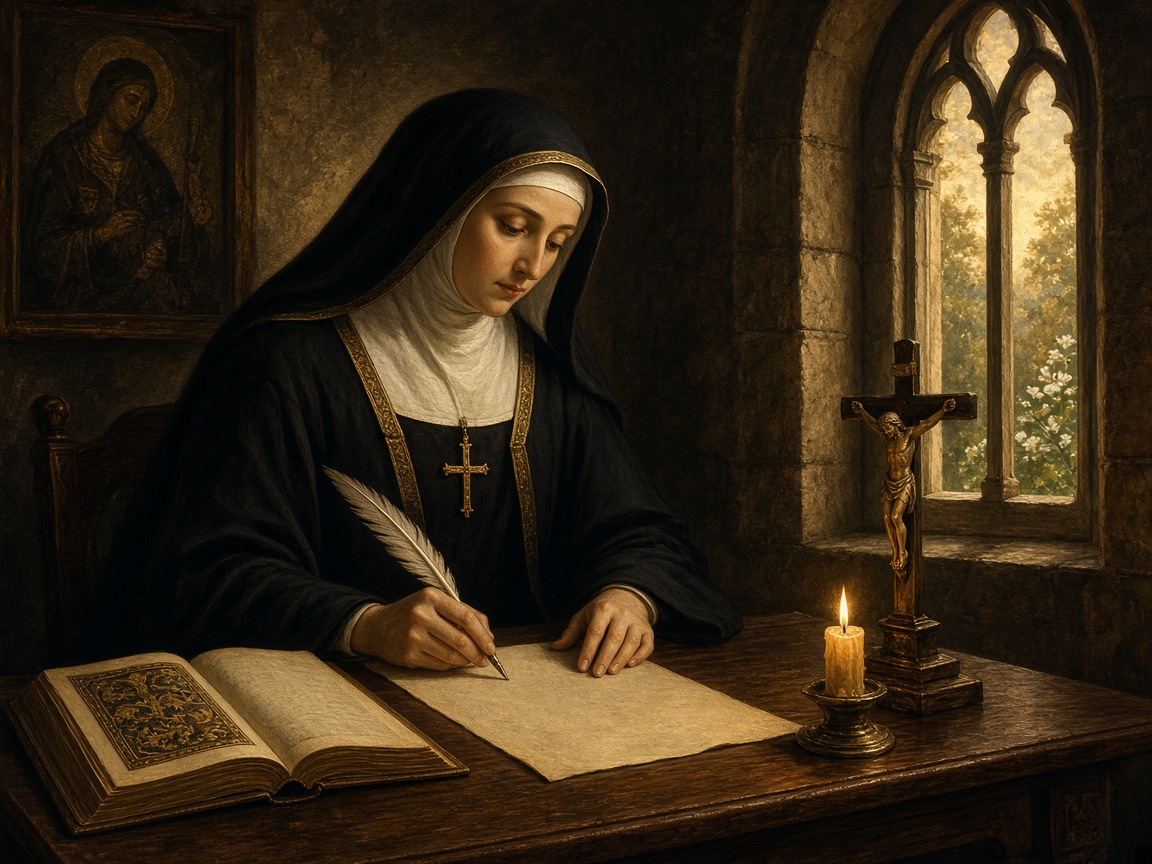
St. Gertrude’s writings, above all the Legatus divinae pietatis (The Herald of Divine Love, often called her Revelations) and the Spiritual Exercises, are woven from the Psalms, the Divine Office, and the prayers of the Mass. Her mysticism is thoroughly liturgical: her visions very often come during the chanting of the Office or at Holy Communion, and they follow the feasts of the Church’s year. For anyone who loves the traditional liturgy, Gertrude shows how the prayers of the Missal and Breviary can become the language of a soul’s own love for God.
A Herald of the Sacred Heart
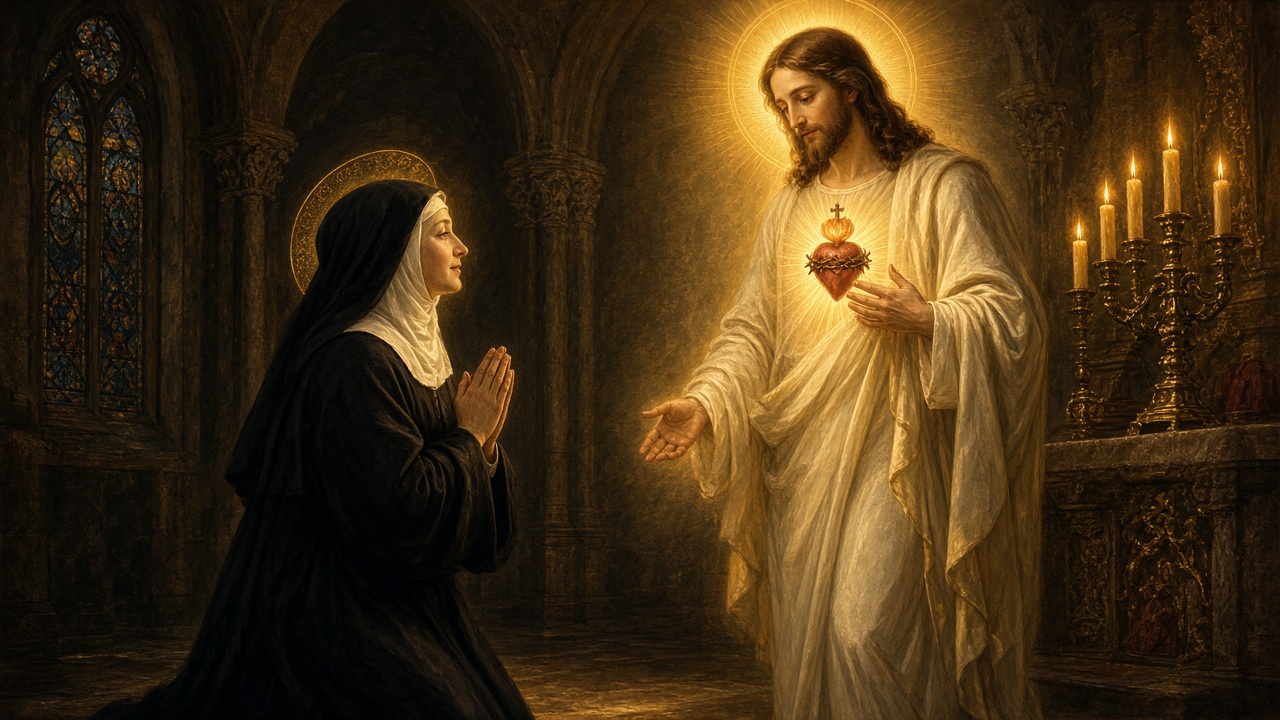
Four centuries before St. Margaret Mary Alacoque, St. Gertrude was already speaking of the Divine Heart. In one famous account, on the feast of St. John the Evangelist, she was allowed to rest with the Beloved Disciple upon the breast of Jesus, as St. John had done at the Last Supper (John 13:23). She asked St. John why he had written nothing of the sweet beating of that Heart. He answered that this grace was reserved for later ages, so that a cooling world might be rekindled in the love of God.
The Church teaches the same truth in plain words: Jesus “has loved us all with a human heart,” and His Sacred Heart, pierced by our sins and for our salvation, is “the chief sign and symbol of that love” (Catechism of the Catholic Church 478). Our Lord himself invites us: “Learn of me, because I am meek, and humble of heart: and you shall find rest to your souls” (Matthew 11:29, Douay-Rheims).
Friend of the Holy Souls
St. Gertrude is also beloved as a patron of the souls in purgatory. Her revelations are full of prayers for the departed, and she freely offered her own merits for them. It is fitting that her feast falls in November, the month the Church dedicates to the faithful departed. “It is therefore a holy and wholesome thought to pray for the dead, that they may be loosed from sins” (2 Machabees 12:46, Douay-Rheims), and the Church has always commended “almsgiving, indulgences, and works of penance undertaken on behalf of the dead” (CCC 1032).
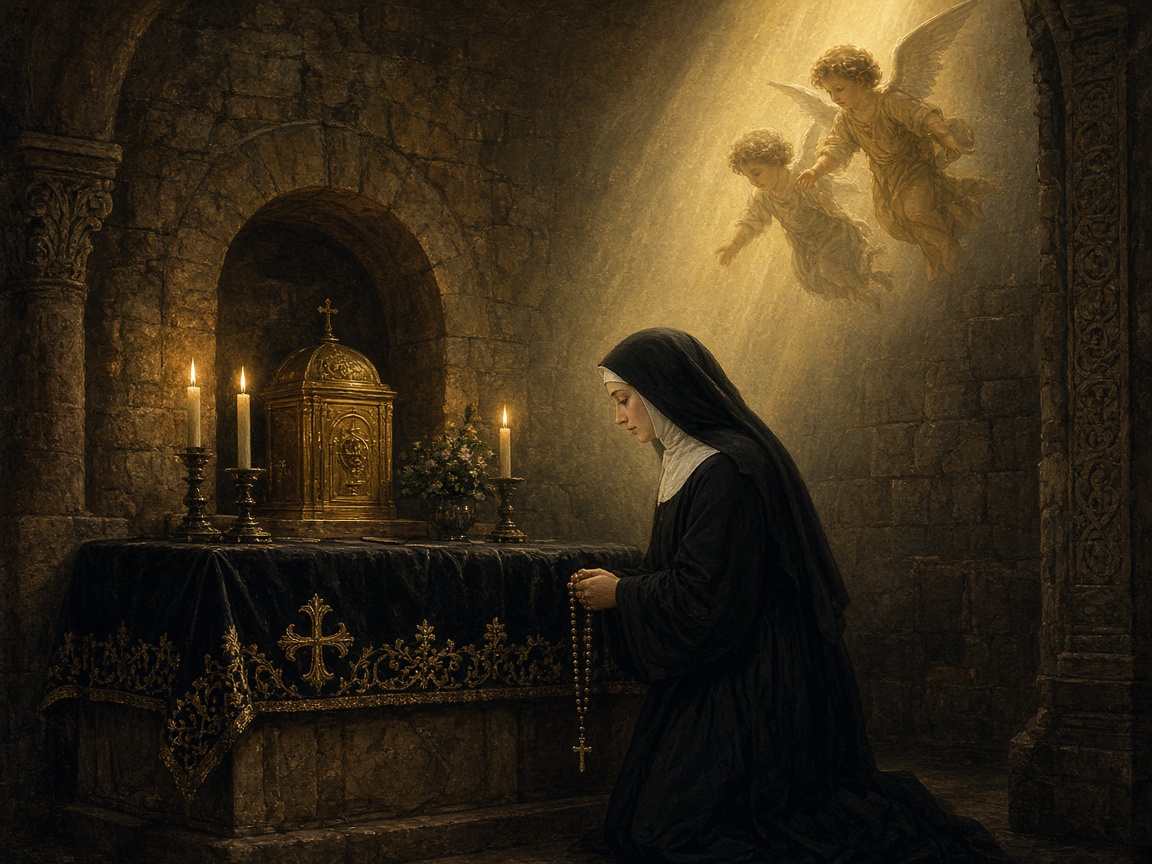
A short prayer for the holy souls has long circulated under her name. Its traditional attribution to St. Gertrude is a matter of popular piety rather than certain history, and the extravagant promises sometimes printed with it carry no Church approval, but the prayer itself is a beautiful offering of the Precious Blood:
Prayer for the Holy Souls
Eternal Father, I offer Thee the Most Precious Blood of Thy Divine Son, Jesus, in union with the Masses said throughout the world today, for all the holy souls in purgatory, for sinners everywhere, for sinners in the universal Church, those in my own home and within my family. Amen.
How to Keep St. Gertrude’s Feast
- Assist at Holy Mass on Monday, November 16, if you can, and make a spiritual communion if you cannot.
- Pray part of the Divine Office, such as Lauds, Vespers, or Compline, the hour of her conversion, as Gertrude did every day.
- Make an act of consecration or reparation to the Sacred Heart, and consider beginning the First Friday devotion.
- Pray for the holy souls, especially your own departed family, and visit a cemetery while the November indulgences remind us of them.
- Read a few pages of The Herald of Divine Love, slowly and prayerfully, as lectio divina.
A Prayer to St. Gertrude
O God, who didst prepare for Thyself a pleasing dwelling in the heart of the blessed virgin Gertrude: through her merits and intercession, mercifully cleanse our hearts of every stain, and grant that we may rejoice in her fellowship. Through Our Lord Jesus Christ, Thy Son, who liveth and reigneth with Thee in the unity of the Holy Ghost, God, world without end. Amen.
Adapted from the traditional Collect of her feast.
St. Gertrude the Great, who rested upon the Heart of Jesus, pray for us, and pray for the holy souls. Stay with us here at Walsingham Radio for more traditional Catholic programming and devotions throughout this month of the faithful departed.